geonyayyad
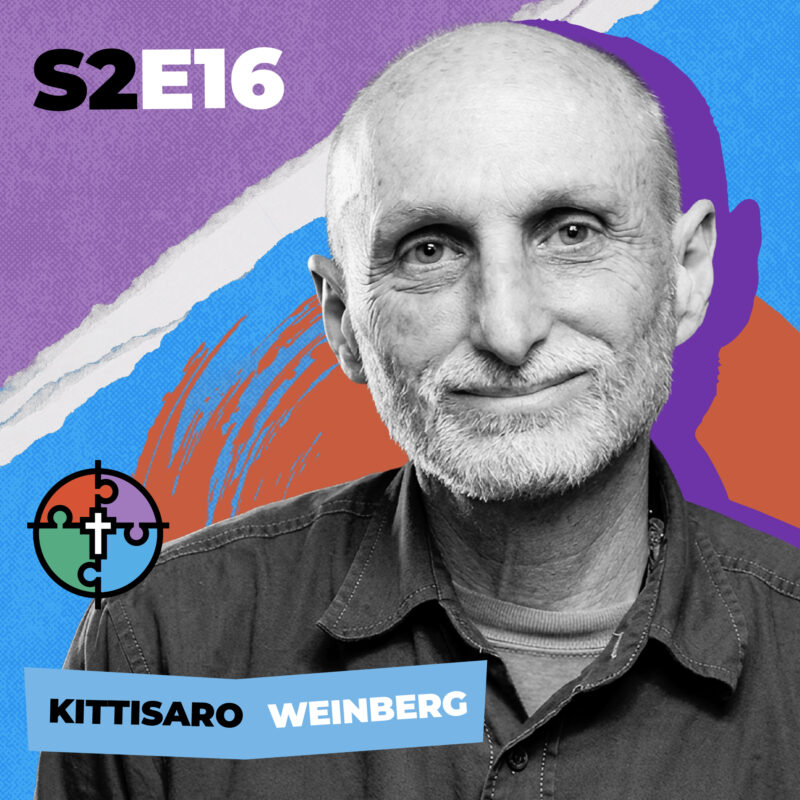
Who’s So Sure? with Kittisaro Weinberg
QUICK SUMMARY
What happens when a champion wrestler and Rhodes Scholar has a vision of Christ in an empty English church and then walks straight into a Buddhist monastery? In this episode of Religion to Reality, Kittisaro Weinberg shares his path from Chattanooga, Tennessee to Ajahn Chah’s forest monastery in Thailand, two full years of silent retreat, and three decades building an interfaith sanctuary in South Africa. It’s a rich, personal conversation about surviving typhoid fever, falling in love as a monk and a nun, and what it really means to listen without an agenda.
IN THIS EPISODE WE EXPLORE
Hosts Dave Plisky and Fr. John Gribowich close out their season-long Buddhism arc with one of their most wide-ranging conversations yet. Kittisaro Weinberg, raised in a Unitarian household by a Jewish father and Southern Baptist mother in the Bible Belt, takes listeners through his unlikely journey: a wrestling career at Princeton, a Rhodes Scholarship at Oxford, a life-altering vision of Christ in a rural English chapel, and, almost immediately after, his first encounter with a Buddhist monk. From there, the story moves to Ajahn Chah’s forest tradition in Thailand, a near-fatal bout of typhoid, monastic life in the UK, falling in love with fellow monastic Thanissara, and an improbable move to South Africa just as Nelson Mandela was elected president. Along the way, Kittisaro reflects on his two year-long silent retreats, the Buddhist-Christian common ground he’s spent decades exploring, and how he practices deep listening every single day.
KEY TAKEAWAYS
[00:04:00] Growing up Unitarian in Chattanooga, Tennessee, between a Jewish father and Baptist mother and getting told by classmates he was “going to hell”
[00:10:00] A five-time state wrestling champion at Princeton whose obsession with winning masked a deeper anxiety
[00:13:00] At Oxford, sitting alone in ancient churches and experiencing a vivid, life-changing vision of Christ
[00:18:00] Walking out of that church and, minutes later, discovering a Buddhist center and meeting his first monk
[00:20:00] Leaving Oxford for Thailand in 1976 to ordain under the forest master Ajahn Chah
[00:21:00] Nearly dying of typhoid fever in rural Thailand and the overnight train ride that saved his life
[00:24:00] Relocating to a new forest monastery in Sussex, England, where he met Thanissara (then a novice nun named Binny)
[00:36:00] What actually happens during a full year of silent monastic retreat, prayer, mantra, and “minding the gap” between thoughts
[00:42:00] The improbable series of events, including a chance phone call to an old Oxford friend — that led Kittisaro and Thanissara to South Africa in 1994, the year of Mandela’s election
[00:50:00] Founding Dharmagiri Sacred Mountain Retreat and building an interfaith community through apartheid’s aftermath and the AIDS epidemic in KwaZulu-Natal
[00:52:00] How Buddhist and Christian contemplative practice share common ground and where “the pure of heart shall see God” meets Buddhist teachings on seeing things as they are
[00:53:00] Kittisaro’s daily practice for deep, agenda-free listening: the simple, humbling question “who’s so sure?”
ABOUT KITTISARO WEINBERG
Kittisaro Weinberg grew up in Chattanooga, Tennessee, and graduated from Princeton as a Rhodes Scholar before studying at Oxford. He ordained as a Buddhist monk with Ajahn Chah in Thailand in 1976 and spent 15 years in monastic life, including helping establish Chithurst Monastery and Devon Vihara in the UK. After disrobi…
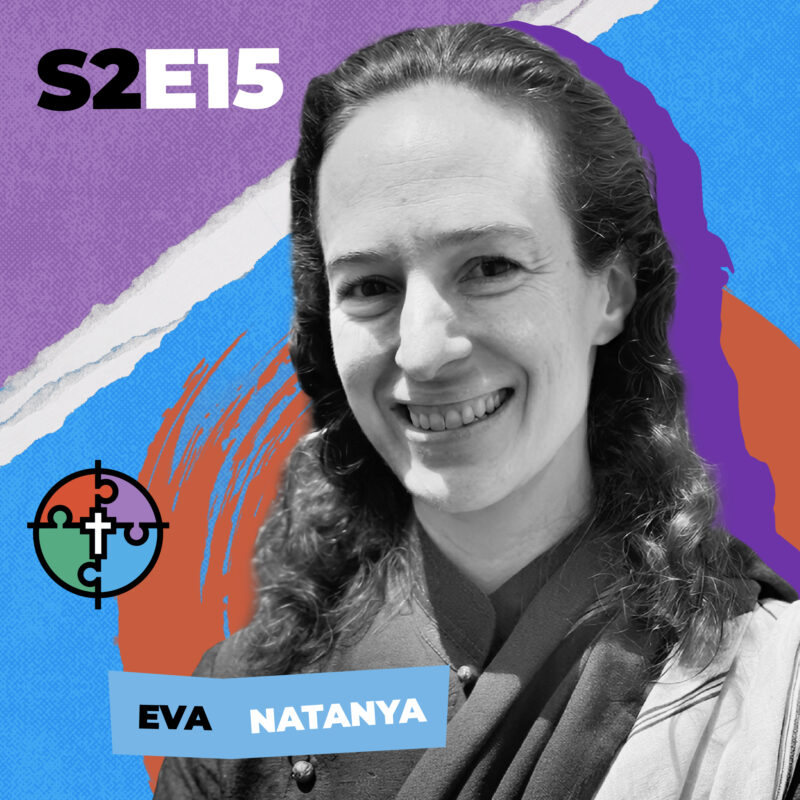
Both with Eva Natanya
QUICK SUMMARY
A former New York City Ballet dancer turned Buddhist scholar and contemplative, Eva Natanya has spent decades holding two traditions, Catholicism and Tibetan Buddhism, not as a contradiction, but as one integrated life. In this episode of Religion to Reality, hosts Dave Plisky and Fr. John Gribowich sit down with Eva to talk about emptiness, the resurrection, fear, authenticity, and why she refuses to call herself “hyphenated.” It’s one of the most theologically rich conversations of the season; give yourself room to sit with it.
IN THIS EPISODE, WE EXPLORE
(00:00) Cold open: Eva on why faith needs powerful reasons to be sustained in a secular world
(01:30) Episode intro, why this episode is called “Both,” and Eva’s bio
(03:30) How Eva and Fr. John first crossed paths, through Eva’s mother, Veronica Mary Ralph
(05:00) Co-writing Living Resurrected Lives with her mother, bringing Buddhist visualization techniques into explicitly Christian, Ignatian-style meditations
(09:00) Eva’s path into Buddhism: ballet, her mother’s early gift of Zen Catholicism, and Teilhard de Chardin at age 12
(13:00) The question that drove her studies: what if Christianity had developed in a completely different culture?
(18:00) Why Buddhism became something she entered “as an insider,” not a comparativist
(19:00) Dave’s tangent on Richard Rohr, “second-half-of-life spirituality,” and the three options for outgrowing one’s container
(26:00) Fr. John on the fear of “coloring outside the lines” as a Catholic
(28:30) Why Zen alone didn’t resolve Eva’s question of whether her practice was “justified” — and why Tibetan Buddhism’s philosophical rigor did
(42:00) Unpacking sunyata / emptiness — the Madhyamaka “middle way” philosophy, and why it doesn’t mean nihilism
(49:00) Reframing doctrine as “provisional but precious”, a possible lens for Jesus’s fulfillment (not abolishment) of the law
(52:00) Concrete practice: guru yoga, analytical meditation, and parallels to confession and absolution
(59:00) The heart of it: what Eva’s work on resurrection actually claims, subtle mind, continuity of consciousness, and “living resurrected lives” now
(1:11:00) Eva’s invitation to the Center for Contemplative Research in Crestone, Colorado
ABOUT EVA NATANYA, PHD
Eva Natanya, PhD, is co-founder, vice president, and resident teacher at the Center for Contemplative Research in Crestone, Colorado. A scholar of Indian and Tibetan Buddhism, Christian theology, and comparative religion, she spent nine years as a professional ballet dancer with the New York City Ballet and the Royal Ballet before earning her MA at the Graduate Theological Union and her PhD in religious studies from the University of Virginia. She has collaborated with Dr. B. Alan Wallace on multiple translations of Tibetan Buddhist texts and co-authored Living Resurrected Lives with her mother, Veronica Mary Ralph. She has spent more than four years in a solitary meditation retreat.
MEMORABLE QUOTES
“One has to have extremely powerful reasons to uphold one’s faith in this world, where it’s not the norm.” — Eva Natanya (00:00)
“I don’t think… I doubt that you feel like you’re Christian today and Buddhist the next. This is a very integrated idea.” — Dave Plisky (00:21:00)
“Can you hold it as precious at the same time as seeing it as empty?” — Eva Natany…
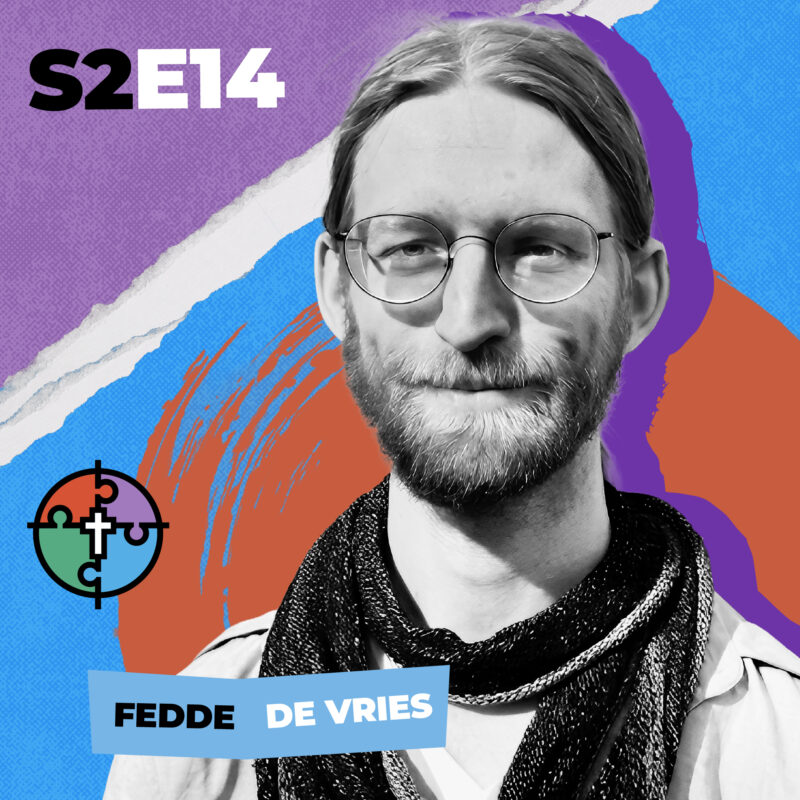
The Foundation We Skipped with Fedde de Vries
QUICK SUMMARY
Fedde de Vries, a professor of Chinese Buddhism, joins hosts Dave Plisky and Fr. John Gribowich to talk about merit-making, ritual, and why “playfulness” might be the secret to taking a tradition seriously. Fedde traces his path from an eight-year-old lighting a candle in a Protestant church to a PhD in Buddhist scholasticism, and opens up about why silent meditation didn’t help during his darkest moments, and what did. Along the way: jazz as a metaphor for scriptural commentary, the surprising overlap between Catholic and Buddhist views on marriage, and what it really means to listen without an agenda.
IN THIS EPISODE WE EXPLORE
“If I beat myself up over being imperfect, then I’m misunderstanding something about the nature of the universe.” (00:00)
How a children’s book on the Four Noble Truths, read at age 12, set Fedde on his spiritual path (03:00)
“Tradition, properly understood… is intrinsically about or contains an element of play.” (30:00)
Why Western Buddhist converts often skip straight to meditation and miss the foundational practices of merit-making, offerings, and ritual (17:00–18:00)
“In periods when I was struggling with depression or panic attacks, silent meditation was often not the answer.” (25:00)
The Sui and Tang dynasties: why this era of Chinese Buddhist history shaped Fedde’s whole approach to the tradition (12:00–16:00)
Comparing Buddhist scriptural commentary to jazz improvisation; taking the tradition seriously while still playing within it (28:00–29:00)
The history of Buddhist-Catholic dialogue at the City of Ten Thousand Buddhas, including the friendship between Master Hsuan Hua and Cardinal Yu Bing (38:00–39:00)
What Fedde learned about marriage, sacredness, and the Trinity from preparing for his own interfaith wedding (40:00–43:00)
Fedde’s practice for listening without an agenda and why it starts in the body, not the ears (47:00–49:00)
ABOUT FEDDE M. DE VRIES
Fedde M. de Vries is an assistant professor at Dharma Realm Buddhist University, located on the campus of the City of Ten Thousand Buddhas in Northern California. His spiritual journey began in his early teens and led him into a lifelong connection with that monastic community, alongside study with other Buddhist teachers in both the West and Asia. Fedde holds a BA in Religious Studies from Leiden University (2012), an MA in Asian Studies from UC Berkeley (2015), and a PhD in Buddhist Studies, also from UC Berkeley (2024). His research focuses on Chinese Buddhist scholasticism during the Sui and Tang dynasties. He joined the DRBU faculty in 2024, teaching courses that introduce students to Buddhist meditative practice.
RESOURCES MENTIONED
The Four Noble Truths — the core Buddhist teaching that first captured Fedde’s attention as a child
City of Ten Thousand Buddhas — the monastic community and campus in Ukiah, California, founded by Master Hsuan Hua
Dharma Realm Buddhist University — where Fedde teaches; offers a translation program, an MA in Buddhist Classics, and a BA in Liberal Arts
The Sui and Tang dynasties — the period of Chinese Buddhist history central to Fedde’s academic research
Master Hsuan Hua — founder of the City of Ten Thousand Buddhas, who brought Chinese Buddhism to the West
Cardinal Yu Bing — the Catholic cardinal and friend of Master Hsuan Hua who founded Fu Jen Catholic University in Taiwan
The Divine Dance by Richard Rohr — recommended to Fedde by Fr. John ahead of his wedding, exploring the Trinity and relationality of the sacred
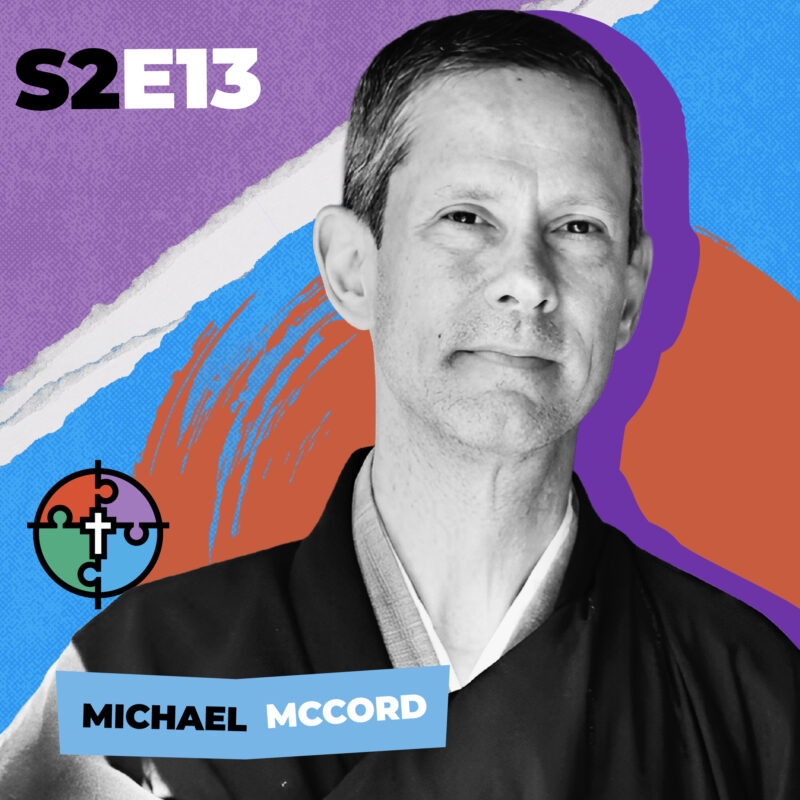
The Bodhisattva Vow with Michael McCord
QUICK SUMMARY
What happens when a former tech and finance professional trades spreadsheets for robes and then brings Zen back into the boardroom? In this rich, wide-ranging conversation, hosts Dave Plisky and Father John Gribowich sit down with Sozan Michael McCord, President of San Francisco Zen Center, to explore what it means to live a 24/7 spiritual practice in the middle of Silicon Valley’s relentless hustle culture. From a crisis of faith in a conservative Christian church, to a fortune teller at a Microsoft company party, to leading a 3,000-member Tuesday night Zen gathering for tech workers in their 20s and 30s, Michael’s story is anything but conventional. And his insights on AI, consciousness, and what makes us irreducibly human might be the most important thing you hear this week.
IN THIS EPISODE, WE EXPLORE
“Zen is a 24/7 practice — or it’s just a weekend hobby.” How Michael defines Zen for modern life, and why most people are doing it wrong. (00:04:00)
From evangelical Christianity to a Zen priesthood — Michael’s extraordinary personal journey through faith, doubt, and reinvention. (00:08:00)
The fortune teller at the Microsoft party who told Michael exactly what path he needed to take and why he ignored her. (00:16:00)
John finally reveals the origin of the podcast’s name, “Religion to Reality,” tracing it to Eastern Orthodox theologian Alexander Schmemann. (00:50:00)
Zen vs. other forms of Buddhism — how Soto Zen differs, why Zen priests can marry, and how Buddhism has always adapted to every culture it enters. (00:36:00)
Buddhism: philosophy or religion? Michael recalls the first thing he ever typed into an AI tool and why he liked the answer. (00:46:00)
Being Human in the Age of AI — Michael’s workshop and why the bodhisattva vow is something no algorithm will ever arrive at logically. (01:06:00)
The convergence of Christianity and Zen — on kenosis, Buddha nature, and why mystics across traditions are essentially saying the same thing. (00:52:00)
Truth with a capital T vs. a small t — a stunning Grand Canyon metaphor for how awareness shapes what we call truth. (01:00:00)
ABOUT MICHAEL MCCORD
Sozan Michael McCord is the President of San Francisco Zen Center, where he has been a resident practitioner since 2009. Over the years he has held leadership roles including Director of City Center (Beginner’s Mind Temple) and Chief Financial Officer. Earlier in his practice he served as Eno (head of the meditation hall) and Tenzo (head cook) at Tassajara Zen Mountain Center, the first Zen training monastery outside of Asia, founded in 1969. Michael was ordained as a Zen priest by Ryushin Paul Haller in 2014. Before Zen, he worked in technology and finance, and holds a BA in Theology from Ambassador University. He also volunteered in Amman, Jordan, providing vocational training for individuals with developmental disabilities.
Reach Michael: michael.mccord@sfzc.org
MEMORABLE QUOTE
“If I saw the answers to all of my problems, they’d probably all be solved. Therefore, the way that I need to live is to hold open the door to things that I might not think are true — because that means the answers probably are something that seem a little weird, or a little strange, or just a little wrong.” — Michael McCord
RESOURCES MENTIONED
San Francisco Zen Center — sfzc.org | Three Bay Area temples: City Center, Tass…
Read More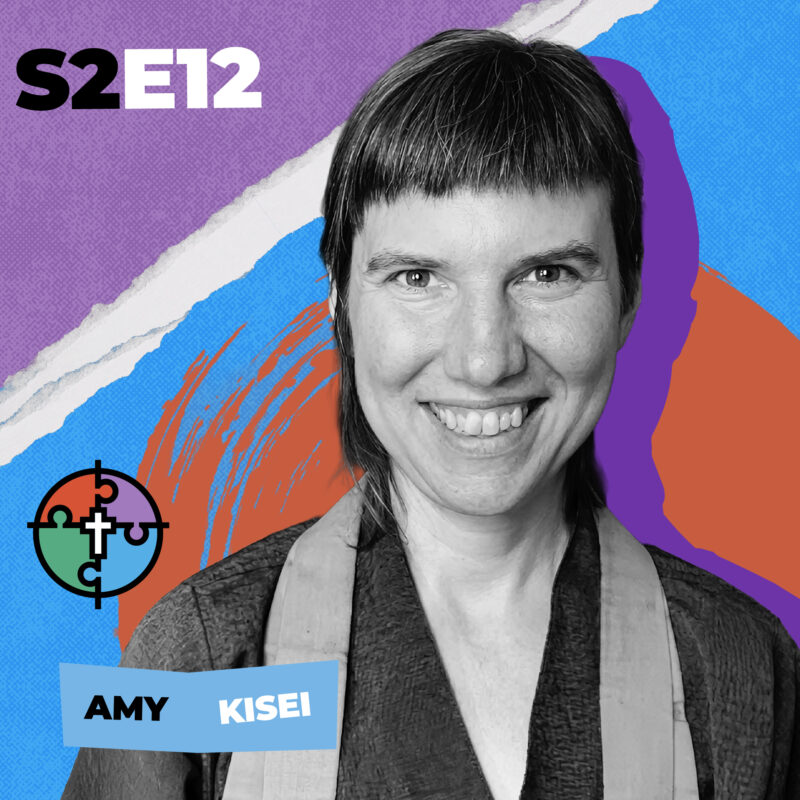
Finding God in the Zendo with Amy Kisei
QUICK SUMMARY
What if the path to awakening was simpler than you think and closer than you imagine? In this episode, hosts Dave Plisky and Father John Gribowich sit down with Sensei Amy Kisei, a Zen Buddhist priest and teacher with 12 years of full-time monastic training. Amy unpacks the core of Zen practice, the radical simplicity of sitting, and explores how stillness, suffering, compassion, and community weave together into a life of genuine awakening. Whether you’re a long-time meditator, spiritually curious, or wondering what Buddhism and Christianity really have in common, this conversation will leave you quieter inside.
IN THIS EPISODE WE EXPLORE
“You are Buddha. You have the wisdom and compassion within you. All you need to do is sit and connect to it.” — Amy on the radical simplicity at the heart of Zen (00:07:00)
How a Thich Nhat Hanh book given to a teenager during 9/11 became the spark for a lifelong Zen path (00:03:30)
What sitting meditation actually is — and why it’s harder than it sounds (00:08:00)
The posture question: how to sit in a way that supports both alertness and relaxation (00:15:30)
How to work with the “monkey mind” — using breath-counting as an anchor (00:19:00)
Sitting alone vs. sitting in community — what changes and why it matters (00:21:30)
Meditation as a purificatory experience: how difficult emotions surface and integrate (00:23:30)
What “awakening” really means in Zen — and how healing fits into it (00:25:00)
Common misunderstandings Christians have about Buddhism (00:26:30)
The Buddhist teaching on suffering (dukkha), the Two Arrows, and why desire is misunderstood (00:36:00)
Compassion as the bodhisattva ideal — and why it includes self-compassion (00:55:00)
Life after the monastery: discerning when to leave and what comes next (00:44:30)
How Amy structures her day — personal practice, spiritual counseling, and sangha (00:47:30)
A closing meditation on listening — and how to practice it anywhere, anytime (00:59:30)
MEMORABLE QUOTE
“Meditation is like an acupuncture needle — it allows the unhealed parts of us to come up and be included, be felt, and integrated.” — Amy Kisei Sensei, on her teacher’s analogy for sitting practice
RESOURCES MENTIONED
Thich Nhat Hanh — Peace in Every Step and Living Buddha, Living Christ
Peace in Every Step (Parallax Press)
Living Buddha, Living Christ (Parallax Press)
Robert Kennedy, S.J. — Jesuit priest and Zen teacher; author of Zen Spirit, Christian Spirit
Mud Lotus Sangha — Columbus, Ohio sitting group guided by Amy Kisei
Zen Community of Oregon — zendust.org
Earth Dreams — Amy’s Substack for Dharma talks and writings: substack.com (search “Earth Dreams Amy Kisei”)
Father John Gribowich’s Substack — Going Analog: johngribowich.substack.com
Kaira Jewel Lingo — featured in the previous Buddhism episode (Season 2, Episode prior)
Michael McCord — Zen priest, featured in the next episode
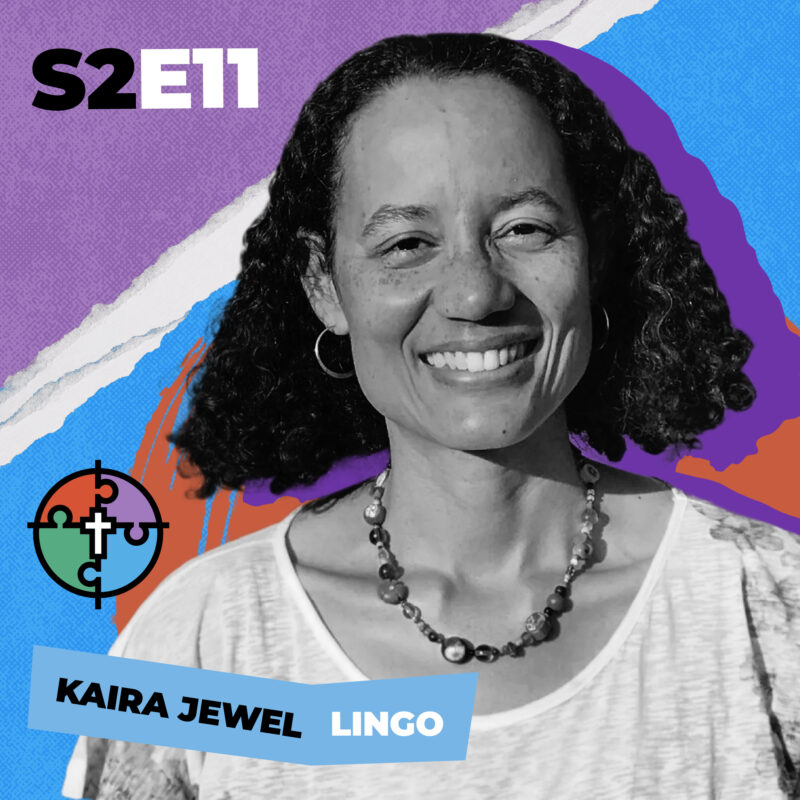
We Don’t Need More Buddhists with Kaira Jewel Lingo
QUICK SUMMARY
What does it mean to commit your entire life to the pursuit of awakening and then step back out into the world? In this episode, hosts Dave Plisky and Fr. John Gribowich sit down with Kaira Jewel Lingo, a senior Dharma teacher in the Plum Village Zen lineage, who spent 15 years as an ordained nun under the direct guidance of the legendary Thich Nhat Hanh. Kaira Jewel takes us inside the day-to-day reality of monastic life in southern France, shares intimate stories of Thich Nhat Hanh’s remarkable presence and rare humility, and explores how Buddhist practices like mindful walking, loving speech, and “beginning anew” can benefit anyone regardless of faith tradition. Whether you’re a curious Catholic, a longtime meditator, or simply someone seeking more meaning, this conversation offers a warm and accessible window into the intersection of Buddhism, Christianity, social justice, and everyday life.
IN THIS EPISODE, WE EXPLORE
Growing Up in Intentional Community
Kaira Jewel was born into Order Ecumenical, a 300-person intentional Christian community living communally in an eight-story building on Chicago’s north side. With daily morning offices, pooled income, hand-me-down clothes, and community meals, she describes a childhood structured around service, simplicity, and the conviction that all people are citizens of the earth. The experience shaped a deep hunger for meaning that she carried into adulthood.
Discovering Thich Nhat Hanh and Plum Village
Finishing college at Stanford in 1997, Kaira Jewel set off to find a teacher and a community with no specific religion in mind. After time in India, she attended Plum Village’s summer retreat in southern France. The moment she saw Thich Nhat Hanh, she knew. She canceled the rest of her trip and stayed. Two years later, she took her vows as a nun and remained for 15 years.
Inside the Heart of Plum Village
Fr. John asks what made Thich Nhat Hanh “the real deal.” Kaira Jewel shares how she never saw him rush, how his presence could dissolve stress with a touch on the shoulder, and how he constantly pushed students out of their comfort zones to stay awake and responsive. She also recounts the remarkable moment he bowed before hundreds of monastic students and apologized publicly acknowledging concerns they had raised in private letters.
Zen and Vipassana: Two Routes, Same Destination
Dave asks how Kaira Jewel holds two distinct Buddhist traditions. She explains that Vipassana emphasizes deep, silent inward retreat, slowing down so much you notice your intention before turning a doorknob, while Plum Village weaves mindfulness into communal life: loving speech, deep listening, gathas (short poems) posted everywhere to bring awareness to brushing your teeth or taking out the trash. She finds them deeply complementary, each opening different angles of the same path.
What Buddhism Offers Christians (and Vice Versa)
Thich Nhat Hanh had a picture of Jesus and Buddha hugging on his altar and bowed to it daily. He spent an entire three-month retreat teaching the Rule of St. Benedict. Kaira Jewel reflects on his concept of “dual belonging” that a tree without roots cannot survive and his challenge to every tradition: lift up the gems, and honestly name and heal the shadows.
Practical Tools for Everyday Life
Kaira Jewel shares two practices she has brought into her marriage with Episcopal priest Adam: walking meditation (which he has combined with the Jesus Prayer, “Jesus” on the inhale, “I trust you” on the exhale) and “beginning anew,” a structured weekly practice of appreciation, regret, and honest sharing that clears pebbles from a relationship before they become boulders.
ABOUT KAIRA JEWEL LINGO
Kaira Jewel…
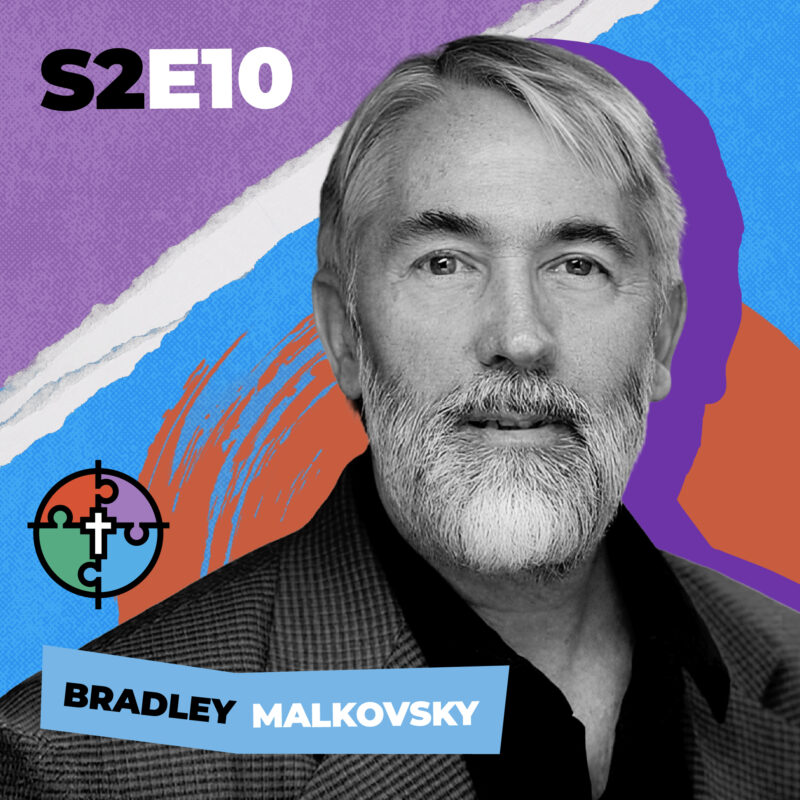
God’s Other Children with Bradley Malkovsky
QUICK SUMMARY
What happens when a Catholic scholar spends decades living inside the world’s great religious traditions, not just studying them from a distance, but praying, meditating, and forming deep relationships across faith lines? Professor Bradley Malkovsky of the University of Notre Dame has done exactly that, and what he found might surprise you. In this episode, Brad takes us from a Benedictine monastery in New Mexico to a 10-day silent Vipassana retreat in India, from the holy peaks of Mount Athos to a miraculous stone-lifting ceremony at a Muslim saint’s shrine in Maharashtra. Along the way, he challenges Catholics to take seriously what Vatican II’s Nostra Aetate actually says and what most Catholics have never been told.
IN THIS EPISODE, WE EXPLORE
Nostra Aetate (Vatican II, 1965) was a revolutionary shift in Catholic teaching, recognizing holiness as possible in other religions. Most Catholics have never read it.
Holiness is not exclusive to Christianity. Brad’s decades of lived experience, not just theology, convinced him the Spirit of God is genuinely at work in other traditions.
Meditation and prayer are not the same thing, but meditation can be a bridge to deeper prayer. Brad still uses breath-awareness techniques from Vipassana in his own spiritual life.
Reincarnation addresses the problem of evil in ways that Christianity struggles with but falls short of Christianity’s affirmation of the infinite dignity of the individual human person.
Real interfaith encounter requires meeting people, not just ideas. Brad’s view of Hinduism, Buddhism, and Islam was transformed not by books alone, but by encountering holy people.
ABOUT BRADLEY MALKOVSKY
Bradley Malkovsky is a professor of theology at the University of Notre Dame and an internationally respected scholar of comparative theology and interreligious dialogue. He has taught at Notre Dame since 1992, holds advanced degrees from the University of Tübingen, and studied Sanskrit and Hindu thought at the University of Pune in India, where he also lived for five years. He is the author of God’s Other Children: Personal Encounters with Faith, Love, and Holiness in Sacred India, winner of the Huston Smith Publishing Prize. He previously served as editor of the Journal of Hindu-Christian Studies.
MEMORABLE QUOTE
“When you actually meet somebody — don’t just hear about something from a book, but actually encounter the living presence of someone who’s holy from another religion — it changes everything.” — Bradley Malkovsky
RESOURCES MENTIONED
The Seven Storey Mountain by Thomas Merton — Find it here
️ Christ in the Desert Monastery — Abiquiú, New Mexico (where Brad spent nearly a year in 1973)
Vipassana Meditation (Goenka tradition) — 10-day silent retreats offered worldwide
⛪ Mount Athos — Eastern Orthodox monastic peninsula in Greece
Haji Ali Dargah — Muslim pilgrimage shrine in Maharashtra, India
Nostra Aetate (Vatican II Declaration, 1965) — Read the full text
Bede Griffiths — Brad’s primary spiritual mentor in India; explore his work here
️Turning to the Mystics podcast with James Finley (Center for Action and Contemplation) — Listen here…
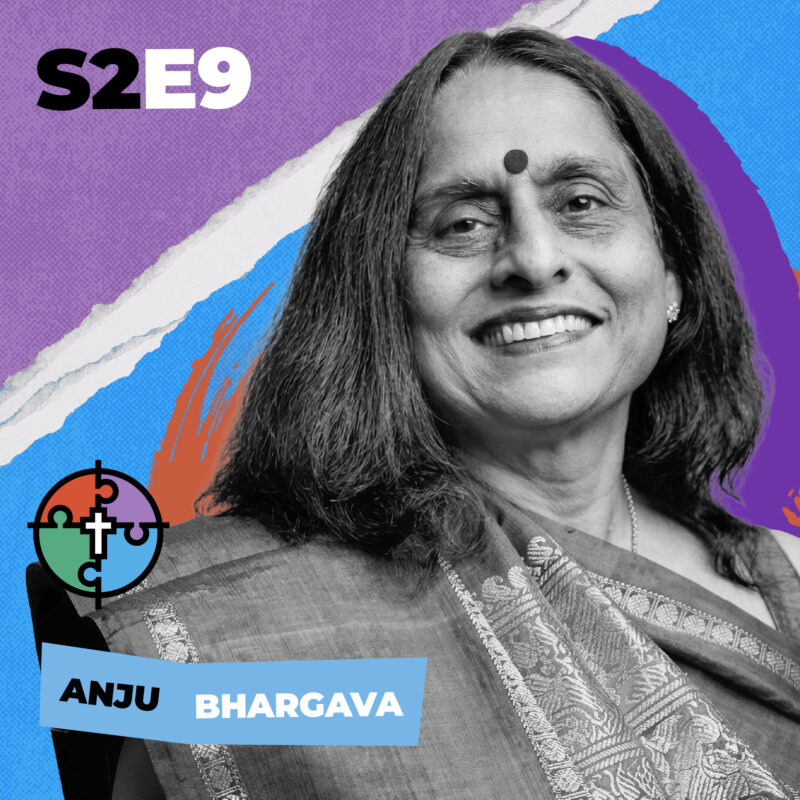
I Am That I Am with Anju Bhargava
QUICK SUMMARY
Anju Bhargava, Vedantic teacher, ordained Hindu minister, and former White House faith advisor, joins hosts Dave Plisky and Father John Gribowich to demystify Hinduism from the inside out. From the meaning of Brahman and Atman, to the four stages of life, to how karma yoga mirrors the Christian idea of surrendering the fruits of your labor to God, this conversation will leave you seeing both your own faith and the broader human spiritual journey in a new light.
IN THIS EPISODE, WE EXPLORE
Sanatana Dharma — the original name for Hinduism; means “universal way of life”
Brahman / Brahmand — the universal soul; the divine that pervades all existence
Atman — the individual soul, always connected to the universal
Moksha — liberation from the cycle of birth and rebirth
Puja — ritual worship; welcoming a deity as an honored guest
Karma yoga — the path of right action and surrender of outcomes
Bhakti yoga — the path of devotion
Gyan yoga — the path of knowledge
Vipassana — a Buddhist-rooted meditation technique that trains the mind toward observation and presence
The Bhagavad Gita — the distillation of all Vedantic teachings; a dialogue between Krishna (teacher) and Arjuna (student)
The Vedas — the four foundational sacred texts of the Hindu tradition
Rag and Dwesh — craving and aversion; the two forces that cause suffering (dukkha)
ABOUT ANJU BHARGAVA
Anju Bhargava is a retired federal executive, former senior banker, Vedantic teacher, and ordained Hindu minister and chaplain with over four decades of experience bridging public service, interfaith leadership, and Hindu philosophy. She served as the first chief risk officer at the Centers for Medicare and Medicaid Services and as a senior vice president at Bank of America. She was the only Hindu American appointed to President Obama’s Inaugural Advisory Council on Faith-Based and Neighborhood Partnerships, where she founded Hindu American Seva Communities to advance community service and social justice. She is a trained yoga teacher, Vipassana practitioner, and founding member of the first South Asian women’s organization in North America.
MEMORABLE QUOTES
“Sanatana Dharma was never tied to any ism. Its goal was always: find God within yourself.”
“Yoga means the union of the soul with the higher self. What we see in the West as Hatha yoga is only the physical aspect — training the body so you can sit and meditate.”
“As you practice meditation more, the frequency of getting pulled off balance becomes less, the intensity reduces, and you recover faster. That is the only real measure of your progress.”
“You make all the effort — but the fruits of your labor are left to the hands of the divine. That is karma yoga.”
RESOURCES MENTIONED
The Golden Road by William Dalrymple — on India’s historical influence across the ancient world
Patanjali Yoga Sutras — foundational philosophy of yoga
University of Maryland School of Medicine Yoga Program
Parliament of the World’s Religions — where Swami Vivekananda first spoke in 1893
Hindu American Seva Communities
Swami Chinmayananda — reformer who worked to bring Vedantic education to modern Hindus
Panchatantras…
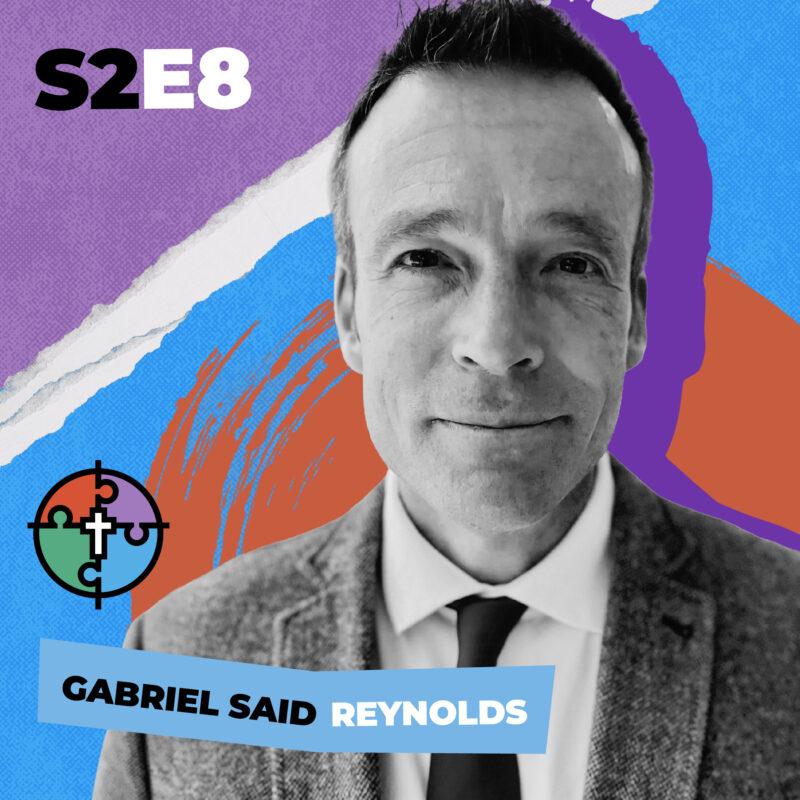
The Forgotten Bells with Gabriel Said Reynolds
QUICK SUMMARY
What happens when a Catholic scholar spends decades immersed in the world of Islam, not to convert, but to truly listen? Gabriel Said Reynolds, one of the leading Quran scholars in the world and a professor at Notre Dame, joins hosts Dave Plisky and Father John Gribowich for a conversation that will challenge assumptions you didn’t even know you had.
From growing up in suburban Connecticut with a vague sense of religion to studying Arabic at Columbia, meeting evangelicals, traveling to Jordan, and ultimately being appointed by Pope Francis to the Vatican’s Dicastery for Interreligious Dialogue, Reynolds’ journey is anything but ordinary. What he’s learned from Islam may just make you a better Christian.
“We created the human and we know what his own soul whispers to him, and we are closer to him than his jugular vein.” — Quran, Chapter 50 (as discussed by Reynolds)
IN THIS EPISODE, WE EXPLORE
Reynolds’ Unexpected Journey into Islamic Studies
Reynolds didn’t set out to become one of the world’s foremost Quran scholars. He came from a casually religious suburban household, learned Arabic partly out of family heritage (his middle name is Said, after an Arab American grandfather), and stumbled into transformative encounters, first with enthusiastic evangelical Protestants at Columbia, then with Muslims during a summer in Jordan. Those experiences sparked a lifelong fascination with how Islam, uniquely among world religions, makes its own claims about Jesus.
What Islam Reveals About American Catholicism
One of Reynolds’ most provocative observations: spending time in Muslim-majority cultures forced him to notice how much American Catholicism has been quietly shaped by Protestant and secular assumptions. From dating culture to the de-emphasis of saints and sacraments, Reynolds argues that Islamic difference serves as a kind of mirror, one that reveals how much Western Christians take for granted.
The Quran Is Not the Islamic Bible
The Bible is not a “Christian Quran,” and the Quran is not an “Islamic Bible.” Reynolds walks through the fundamental differences in purpose, in content, in the doctrine behind each text. The Quran was designed to be recited in prayer (closer to a psalter in function), rhymes in Arabic, and is understood by Muslims to be the literal word of God, not a human account of divine events.
Orthodoxy vs. Orthopraxy in Islam
While Western Christianity has emphasized right belief, Islam developed a rich tradition of orthopraxy, right practice. Reynolds explains how Islamic legal traditions (including what is often called Sharia) govern the smallest details of life, from how to wash before prayer to whether a man may shake a female colleague’s hand. He draws lessons for Catholics about discipline, obligation, and what it means to take religious practice seriously.
“The Goal Is to Disagree Well”
Reynolds reframes interreligious dialogue: the goal isn’t to find a lowest-common-denominator spirituality or to paper over real differences. It’s to listen deeply, understand the coherence and beauty of another tradition, and still hold your own convictions. Islam’s understanding of Jesus, as a prophet who simply paves the way for Muhammad, is dramatically different from Christianity’s. And Reynolds thinks sitting with that difference, rather than dissolving it, is what genuine dialogue looks like.
Mysticism, Sufism, and Surprising Common Ground
Father John asks about mysticism, and Reynolds explores the Sufi tradition, the organized mystical path in Islam known as the tariqa. He also makes a more everyday point: for many Muslims, the five daily prayers are not going through the motions. The full prostration, the ritual washing, the surrender before Go…
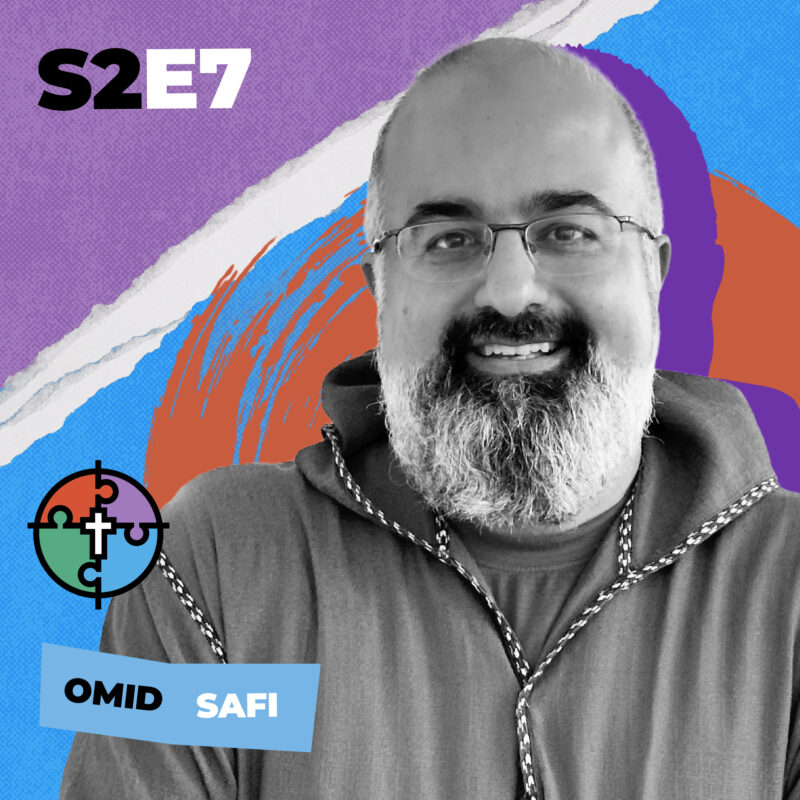
The Sufi Heart with Omid Safi
QUICK SUMMARY
What if God is closer to you than the ocean is to the fish? Sufi scholar and Duke University professor Omid Safi joins Religion to Reality for one of the most luminous conversations in the podcast’s history. Omid walks us through the heart of Islamic mysticism, not as doctrine, but as a living, breathing practice of radical love. From his childhood in Iran to the halls of Duke, from Rumi’s prayer to the crisis of violence in the Middle East, this episode is an invitation to stop compartmentalizing your faith and start living it in every breath.
Note: Toward the end of this episode, Omid speaks candidly about violence in the Middle East, including recent events in Gaza and Iran. Sensitive listeners may wish to be aware.
IN THIS EPISODE, WE EXPLORE
The heart of Islamic mysticism through the eyes of Sufi scholar Omid Safi, from the daily practice of dhikr (the remembrance of God) to Rumi’s vision of prayer as a way of being, the unity beneath all world religions, and what it truly means to listen without agenda. Omid also speaks with unflinching honesty about violence, scripture, and the question every believer must ask: what would the prophets actually sanction today?
ABOUT OMID SAFI
Omid Safi is a professor of Islamic Studies at Duke University, specializing in Islamic spirituality and contemporary thought. Born in Florida and raised in Iran, Omid bridges two worlds as a teacher, author, and spiritual guide in the Sufi tradition of radical love. He is the founder of Illuminated Courses and Tours, which has brought more than 2,500 people from over 20 countries on spiritual journeys to Turkey and Morocco since 2002. His most recent book, Radical Love: Teachings from the Islamic Mystical Tradition, draws on the foundational texts of Sufism to offer a path of love-drenched, justice-inclined spirituality for the modern world. He has been mentored by luminaries, including the late Vincent Harding, a close friend of Dr. Martin Luther King Jr.
MEMORABLE QUOTE
“I prayed so often that my whole being has become a prayer. Now, whenever somebody sees my face, they start to pray.” — Rumi, as quoted by Omid Safi [00:18:50]
RESOURCES MENTIONED
Radical Love: Teachings from the Islamic Mystical Tradition — Omid Safi’s most recent book
Illuminated Courses — Online courses, monthly gatherings, and in-person spiritual retreats open to all
Dominion by Tom Holland — mentioned by host Dave Plisky in the discussion on the Western colonial labeling of world religions
Abraham Joshua Heschel — the Jewish theologian and civil rights activist who deeply shaped Omid’s understanding of Judaism
✊ Vincent Harding — scholar, activist, and close friend of Dr. King who mentored Omid in the liberationist tradition of Christianity
David Foster Wallace’s 2005 Kenyon College Commencement Address (“This Is Water”) — referenced at [00:51:50] as a modern parallel to Rumi’s fish metaphor
️ Previous episode: Dalia Mogahed on the Muslim Experience in America
️ Next episode: Gabriel Said Reynolds, Notre Dame professor of Islamic Studies, on what he learned from the Quran




Recent Comments