The Forgotten Bells with Gabriel Said Reynolds
QUICK SUMMARY
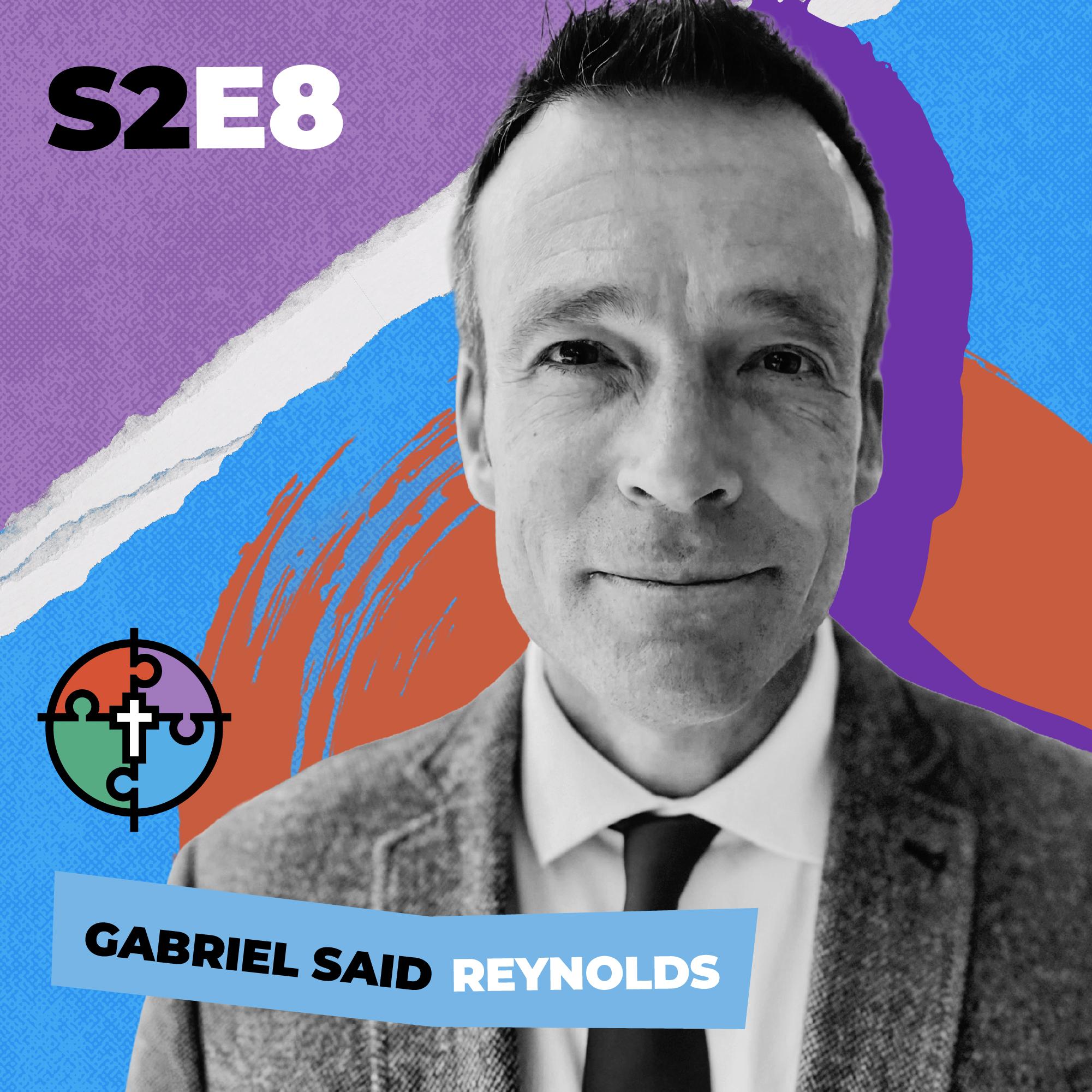
What happens when a Catholic scholar spends decades immersed in the world of Islam, not to convert, but to truly listen? Gabriel Said Reynolds, one of the leading Quran scholars in the world and a professor at Notre Dame, joins hosts Dave Plisky and Father John Gribowich for a conversation that will challenge assumptions you didn’t even know you had.
From growing up in suburban Connecticut with a vague sense of religion to studying Arabic at Columbia, meeting evangelicals, traveling to Jordan, and ultimately being appointed by Pope Francis to the Vatican’s Dicastery for Interreligious Dialogue, Reynolds’ journey is anything but ordinary. What he’s learned from Islam may just make you a better Christian.
“We created the human and we know what his own soul whispers to him, and we are closer to him than his jugular vein.” — Quran, Chapter 50 (as discussed by Reynolds)
IN THIS EPISODE, WE EXPLORE
Reynolds’ Unexpected Journey into Islamic Studies
Reynolds didn’t set out to become one of the world’s foremost Quran scholars. He came from a casually religious suburban household, learned Arabic partly out of family heritage (his middle name is Said, after an Arab American grandfather), and stumbled into transformative encounters, first with enthusiastic evangelical Protestants at Columbia, then with Muslims during a summer in Jordan. Those experiences sparked a lifelong fascination with how Islam, uniquely among world religions, makes its own claims about Jesus.
What Islam Reveals About American Catholicism
One of Reynolds’ most provocative observations: spending time in Muslim-majority cultures forced him to notice how much American Catholicism has been quietly shaped by Protestant and secular assumptions. From dating culture to the de-emphasis of saints and sacraments, Reynolds argues that Islamic difference serves as a kind of mirror, one that reveals how much Western Christians take for granted.
The Quran Is Not the Islamic Bible
The Bible is not a “Christian Quran,” and the Quran is not an “Islamic Bible.” Reynolds walks through the fundamental differences in purpose, in content, in the doctrine behind each text. The Quran was designed to be recited in prayer (closer to a psalter in function), rhymes in Arabic, and is understood by Muslims to be the literal word of God, not a human account of divine events.
Orthodoxy vs. Orthopraxy in Islam
While Western Christianity has emphasized right belief, Islam developed a rich tradition of orthopraxy, right practice. Reynolds explains how Islamic legal traditions (including what is often called Sharia) govern the smallest details of life, from how to wash before prayer to whether a man may shake a female colleague’s hand. He draws lessons for Catholics about discipline, obligation, and what it means to take religious practice seriously.
“The Goal Is to Disagree Well”
Reynolds reframes interreligious dialogue: the goal isn’t to find a lowest-common-denominator spirituality or to paper over real differences. It’s to listen deeply, understand the coherence and beauty of another tradition, and still hold your own convictions. Islam’s understanding of Jesus, as a prophet who simply paves the way for Muhammad, is dramatically different from Christianity’s. And Reynolds thinks sitting with that difference, rather than dissolving it, is what genuine dialogue looks like.
Mysticism, Sufism, and Surprising Common Ground
Father John asks about mysticism, and Reynolds explores the Sufi tradition, the organized mystical path in Islam known as the tariqa. He also makes a more everyday point: for many Muslims, the five daily prayers are not going through the motions. The full prostration, the ritual washing, the surrender before God, there is a mystical dimension to ordinary Muslim prayer that has something to teach Catholics about the daily practice of faith.
How to Listen Without Agenda
Reynolds closes with a reflection on what makes real listening possible: friendship, or at minimum a disposition toward friendship. Citing Aquinas, “to love is to will the good of the other”, he argues that deep listening requires us to set aside the instinct to prepare our rebuttal and instead seek to understand what motivates hundreds of millions of people in their daily religious lives.
ABOUT GABRIEL SAID REYNOLDS
Gabriel Said Reynolds is the Crowley Professor of Islamic Studies and Theology at the University of Notre Dame. A leading scholar of the Quran, his work focuses on reading the text within the religious world that produced it, one shaped by the Bible, late antiquity theology, and a shared search for God.
He earned his PhD from Yale University in 2003 and has published widely on the relationship between the Quran and earlier scriptures, including:
- The Quran and Its Biblical Subtext
- The Quran and the Bible
- Christianity and the Quran
Reynolds also serves as the general editor of the Yale Dictionary of the Quran and brings his scholarship to a broader audience through his YouTube channel, Exploring the Quran and the Bible. He has lectured internationally from Cairo to Oxford to New York City and was appointed by Pope Francis to serve on the Vatican’s Dicastery for Interreligious Dialogue.
MEMORABLE QUOTES
“Islam, simply by being different, led me to reconsider things that American Christians often take for granted.” — Gabriel Said Reynolds [10:58]
“The goal of interreligious dialogue, for me, is to disagree well.” — Gabriel Said Reynolds [38:45]
“The Quran is not an Islamic Bible. The Bible is not a Christian Quran.” — Gabriel Said Reynolds [26:30]
“For many Muslims, religion isn’t something that happens an hour a week. It’s woven into every moment of life.” — Gabriel Said Reynolds [54:00]
RESOURCES MENTIONED
- Gabriel Said Reynolds — University of Notre Dame Faculty Page
- YouTube Channel — Exploring the Quran and the Bible
- The Quran and Its Biblical Subtext — Gabriel Said Reynolds
- The Quran and the Bible — Gabriel Said Reynolds
- Christianity and the Quran — Gabriel Said Reynolds
- Yale Dictionary of the Quran — General Editor: Gabriel Said Reynolds
- Vatican’s Dicastery for Interreligious Dialogue — Vatican Website
- The Righteous Mind — Jonathan Haidt (mentioned by Father John)
- Living Buddha, Living Christ — Thich Nhat Hanh (mentioned by Dave)
- Scriptural Reasoning — Interfaith movement involving Jews, Christians, and Muslims
- Pew Research Center — Referenced for U.S. Muslim population data
- Dignitatis Humanae — Vatican II document on religious freedom