Religion to Reality


All Episodes

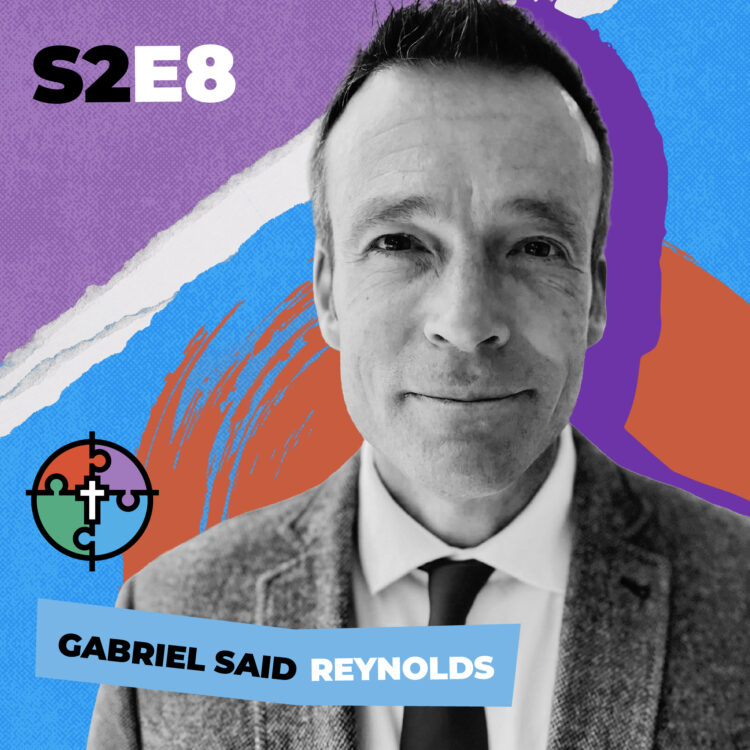
The Forgotten Bells with Gabriel Said Reynolds

QUICK SUMMARY
What happens when a Catholic scholar spends decades immersed in the world of Islam, not to convert, but to truly listen? Gabriel Said Reynolds, one of the leading Quran scholars in the world and a professor at Notre Dame, joins hosts Dave Plisky and Father John Gribowich for a conversation that will challenge assumptions you didn’t even know you had.
From growing up in suburban Connecticut with a vague sense of religion to studying Arabic at Columbia, meeting evangelicals, traveling to Jordan, and ultimately being appointed by Pope Francis to the Vatican’s Dicastery for Interreligious Dialogue, Reynolds’ journey is anything but ordinary. What he’s learned from Islam may just make you a better Christian.
“We created the human and we know what his own soul whispers to him, and we are closer to him than his jugular vein.” — Quran, Chapter 50 (as discussed by Reynolds)
IN THIS EPISODE, WE EXPLORE
Reynolds’ Unexpected Journey into Islamic Studies
Reynolds didn’t set out to become one of the world’s foremost Quran scholars. He came from a casually religious suburban household, learned Arabic partly out of family heritage (his middle name is Said, after an Arab American grandfather), and stumbled into transformative encounters, first with enthusiastic evangelical Protestants at Columbia, then with Muslims during a summer in Jordan. Those experiences sparked a lifelong fascination with how Islam, uniquely among world religions, makes its own claims about Jesus.
What Islam Reveals About American Catholicism
One of Reynolds’ most provocative observations: spending time in Muslim-majority cultures forced him to notice how much American Catholicism has been quietly shaped by Protestant and secular assumptions. From dating culture to the de-emphasis of saints and sacraments, Reynolds argues that Islamic difference serves as a kind of mirror, one that reveals how much Western Christians take for granted.
The Quran Is Not the Islamic Bible
The Bible is not a “Christian Quran,” and the Quran is not an “Islamic Bible.” Reynolds walks through the fundamental differences in purpose, in content, in the doctrine behind each text. The Quran was designed to be recited in prayer (closer to a psalter in function), rhymes in Arabic, and is understood by Muslims to be the literal word of God, not a human account of divine events.
Orthodoxy vs. Orthopraxy in Islam
While Western Christianity has emphasized right belief, Islam developed a rich tradition of orthopraxy, right practice. Reynolds explains how Islamic legal traditions (including what is often called Sharia) govern the smallest details of life, from how to wash before prayer to whether a man may shake a female colleague’s hand. He draws lessons for Catholics about discipline, obligation, and what it means to take religious practice seriously.
“The Goal Is to Disagree Well”
Reynolds reframes interreligious dialogue: the goal isn’t to find a lowest-common-denominator spirituality or to paper over real differences. It’s to listen deeply, understand the coherence and beauty of another tradition, and still hold your own convictions. Islam’s understanding of Jesus, as a prophet who simply paves the way for Muhammad, is dramatically different from Christianity’s. And Reynolds thinks sitting with that difference, rather than dissolving it, is what genuine dialogue looks like.
Mysticism, Sufism, and Surprising Common Ground
Father John asks about mysticism, and Reynolds explores the Sufi tradition, the organized mystical path in Islam known as the tariqa. He also makes a more everyday point: for many Muslims, the five daily prayers are not going through the motions. The full prostration, the ritual washing, the surrender before Go…
The Sufi Heart with Omid Safi

QUICK SUMMARY
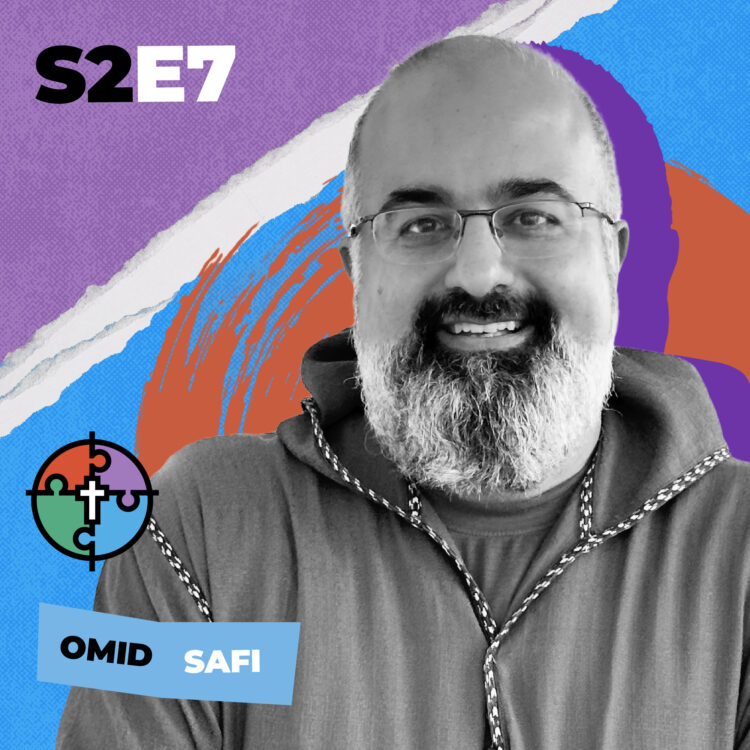
What if God is closer to you than the ocean is to the fish? Sufi scholar and Duke University professor Omid Safi joins Religion to Reality for one of the most luminous conversations in the podcast’s history. Omid walks us through the heart of Islamic mysticism, not as doctrine, but as a living, breathing practice of radical love. From his childhood in Iran to the halls of Duke, from Rumi’s prayer to the crisis of violence in the Middle East, this episode is an invitation to stop compartmentalizing your faith and start living it in every breath.
Note: Toward the end of this episode, Omid speaks candidly about violence in the Middle East, including recent events in Gaza and Iran. Sensitive listeners may wish to be aware.
IN THIS EPISODE, WE EXPLORE
The heart of Islamic mysticism through the eyes of Sufi scholar Omid Safi, from the daily practice of dhikr (the remembrance of God) to Rumi’s vision of prayer as a way of being, the unity beneath all world religions, and what it truly means to listen without agenda. Omid also speaks with unflinching honesty about violence, scripture, and the question every believer must ask: what would the prophets actually sanction today?
ABOUT OMID SAFI
Omid Safi is a professor of Islamic Studies at Duke University, specializing in Islamic spirituality and contemporary thought. Born in Florida and raised in Iran, Omid bridges two worlds as a teacher, author, and spiritual guide in the Sufi tradition of radical love. He is the founder of Illuminated Courses and Tours, which has brought more than 2,500 people from over 20 countries on spiritual journeys to Turkey and Morocco since 2002. His most recent book, Radical Love: Teachings from the Islamic Mystical Tradition, draws on the foundational texts of Sufism to offer a path of love-drenched, justice-inclined spirituality for the modern world. He has been mentored by luminaries, including the late Vincent Harding, a close friend of Dr. Martin Luther King Jr.
MEMORABLE QUOTE
“I prayed so often that my whole being has become a prayer. Now, whenever somebody sees my face, they start to pray.” — Rumi, as quoted by Omid Safi [00:18:50]
RESOURCES MENTIONED

Radical Love: Teachings from the Islamic Mystical Tradition — Omid Safi’s most recent book
Illuminated Courses — Online courses, monthly gatherings, and in-person spiritual retreats open to all
Dominion by Tom Holland — mentioned by host Dave Plisky in the discussion on the Western colonial labeling of world religions
Abraham Joshua Heschel — the Jewish theologian and civil rights activist who deeply shaped Omid’s understanding of Judaism
✊ Vincent Harding — scholar, activist, and close friend of Dr. King who mentored Omid in the liberationist tradition of Christianity
David Foster Wallace’s 2005 Kenyon College Commencement Address (“This Is Water”) — referenced at [00:51:50] as a modern parallel to Rumi’s fish metaphor
️ Previous episode: Dalia Mogahed on the Muslim Experience in America
️ Next episode: Gabriel Said Reynolds, Notre Dame professor of Islamic Studies, on what he learned from the Quran

An Audience of One with Dalia Mogahed

QUICK SUMMARY
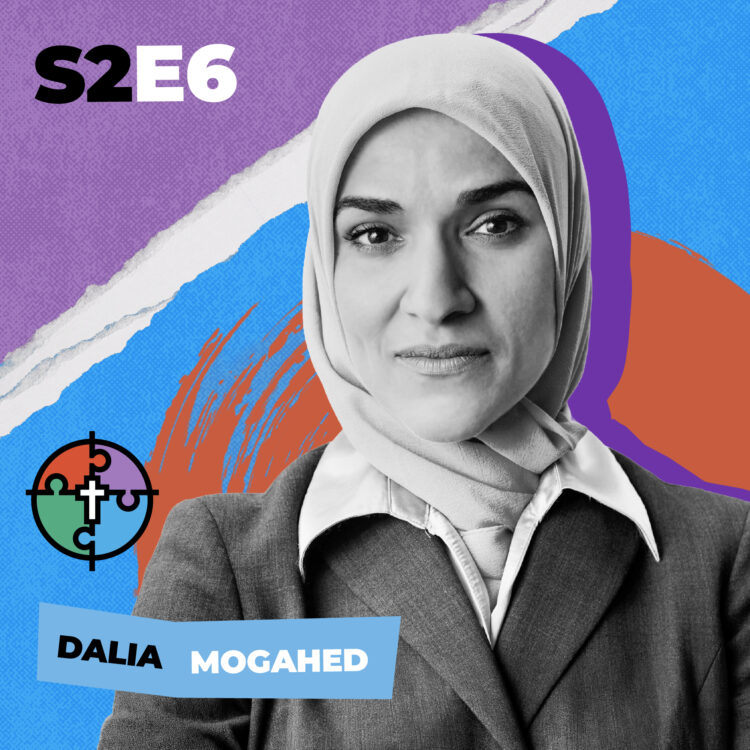
What does it mean to be fully committed to your faith while building bridges across differences? In this episode of Religion to Reality, Dave Plisky and Fr. John Gribowich sit down with renowned Muslim scholar and author Dalia Mogahed for a thoughtful conversation on faith, identity, prayer, fasting, belonging, and interfaith dialogue. Dalia shares her journey from Egypt to America, how discovering Malcolm X shaped her identity as an American Muslim, and why listening without an agenda may be one of the greatest acts of love.
IN THIS EPISODE, WE EXPLORE
Dalia Mogahed is one of the most respected voices on Islam, identity, and religious understanding in America today. As a researcher, author, public speaker, and former advisor to President Barack Obama, she has dedicated her career to fostering greater understanding between communities and challenging misconceptions about faith.
In this conversation, Dalia reflects on growing up between two cultures, embracing her Muslim identity, and discovering how faith can serve as a source of freedom rather than restriction. She discusses the meaning behind the hijab, the spiritual practices that shape Muslim life, and the transformative power of prayer, fasting, charity, and pilgrimage.
The discussion also explores common misconceptions about Islam, the role of Jesus in Islamic belief, and the importance of approaching others with curiosity rather than judgment. Throughout the episode, Dalia offers profound insights that resonate far beyond religious boundaries, reminding us that authentic listening is essential for human connection.
ABOUT DALIA MOGAHED
Dalia Mogahed is a scholar at the Institute for Social Policy and Understanding (ISPU), CEO of Mogahed Consulting, and former Executive Director of the Gallup Center for Muslim Studies. She co-authored Who Speaks for Islam? What a Billion Muslims Really Think with John L. Esposito, and served on President Barack Obama’s Advisory Council on Faith-Based and Neighborhood Partnerships. Her TED Talk on identity and belonging was named one of the top TED Talks of 2016. Dalia is also co-host of the Quran Conversations podcast.  
MEMORABLE QUOTES
“Listening without an agenda is about the most generous thing that one can do for another person.”
“The only way to truly liberate ourselves is to surrender to God.”
“You are not representing 1.5 billion people. You are representing yourself.”
“The sense of obligation is part of the relief.”
RESOURCES MENTIONED

Who Speaks for Islam? What a Billion Muslims Really Think by Dalia Mogahed and John L. Esposito
Dalia Mogahed’s TED Talk: “What It’s Like to Be Muslim in America”
The Autobiography of Malcolm X
Quran Conversations Podcast
Institute for Social Policy and Understanding (ISPU)

R2R Season 2 Drop Teaser

BIG NEWS: Season 2 of Religion to Reality drops all at once on 7/13—no more weekly waits. Subscribe now

Join us on Substack (http://religiontoreality.substack.com) for our free interfaith monthly gathering—first Wed of every month, including today!

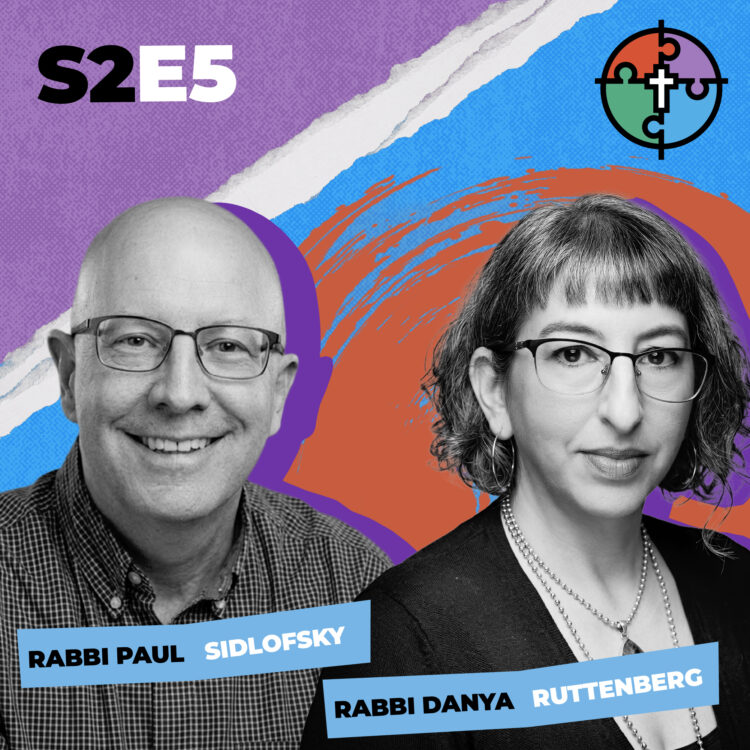
The Practice of Repair with Rabbis Danya Ruttenberg and Paul Sidlofsky

QUICK SUMMARY
What if our culture’s obsession with forgiveness is actually getting in the way of healing? In this rich conversation, award-winning author and Rabbi Danya Ruttenberg challenges popular forgiveness culture, arguing that the real obligation falls on the person who caused harm, not the person who survived it. She walks us through the Jewish framework for repentance, repair, and amends (drawing on Maimonides) and unpacks why “cancel culture” and “forgiveness culture” are two sides of the same broken coin. We also hear from Rabbi Paul Sidlofsky of Temple Israel Tallahassee, who brings a deeply thoughtful perspective on disagreement within Judaism, the living nature of Torah interpretation, and how to hold tradition and change in creative tension. If you’ve ever wrestled with whether you have to forgive someone or wondered what accountability actually looks like, this episode is for you.
IN THIS EPISODE, WE EXPLORE
On forgiveness: Forgiveness is not something a harmed person owes; it may be healing, but it is not obligatory, especially when the person who caused harm has not done the work of repair. Forgiveness and reconciliation are also not the same thing.
On repentance (per Maimonides): The person who caused harm must (1) fully own what they did, (2) do deep internal work to become someone who wouldn’t repeat the harm, (3) make meaningful amends, and (4) apologize sincerely, up to three times, with an accountability team, before it can be considered their best effort.
On Torah: Jewish tradition has always been one of living interpretation. As Rabbi Sidlofsky puts it, “Halakha has a vote, but not a veto.” Even Moses, in the famous Talmudic story, sat in Rabbi Akiva’s classroom and couldn’t understand his own books because the tradition had grown so richly beyond the original text.
ABOUT RABBI DANYA RUTTENBERG & RABBI PAUL SIDLOFSKY
Rabbi Danya Ruttenberg is the award-winning author of eight books and writes at lifeisasacredtext.com. Named by Newsweek as a “rabbi to watch” and recognized by the Center for American Progress as a faith leader to watch, she has written for The New York Times, The Washington Post, The Atlantic, TIME, and many other major publications. Her commentary has appeared on NPR, CNN, NBC News, and Good Morning America. She led the Network of Rabbis for Repro during and after the landmark 2022 Supreme Court decision on abortion law and has played an active role in shaping Jewish responses to sexual misconduct and systemic injustice. Her book On Repentance and Repair is a must-read for anyone thinking about accountability culture.
Rabbi Paul Sidlofsky brings 38 years of congregational experience across the United States and Canada. Currently based in Tallahassee, Florida, he serves Temple Israel and is deeply engaged in interfaith work, including co-chairing the Cap Tallahassee Interfaith Clergy Council and participating in the God Squad with the Village Square. He is a warm and thoughtful voice on Torah interpretation, Jewish-Christian dialogue, and what it means to build an inclusive community.
MEMORABLE QUOTE
“If you cause harm, you have an obligation to clean it up — to truly own it fully in all the ways. And if you are harmed and your harm-doer has not done the work of repair and amends, you do not owe this person forgiveness at all.” — Rabbi Danya Ruttenberg
RESOURCES MENTIONED

On Repentance and Repair by Rabbi Danya Ruttenberg — her book on the Jewish roadmap for accountability
✍️ Rabbi Danya’s Substack:

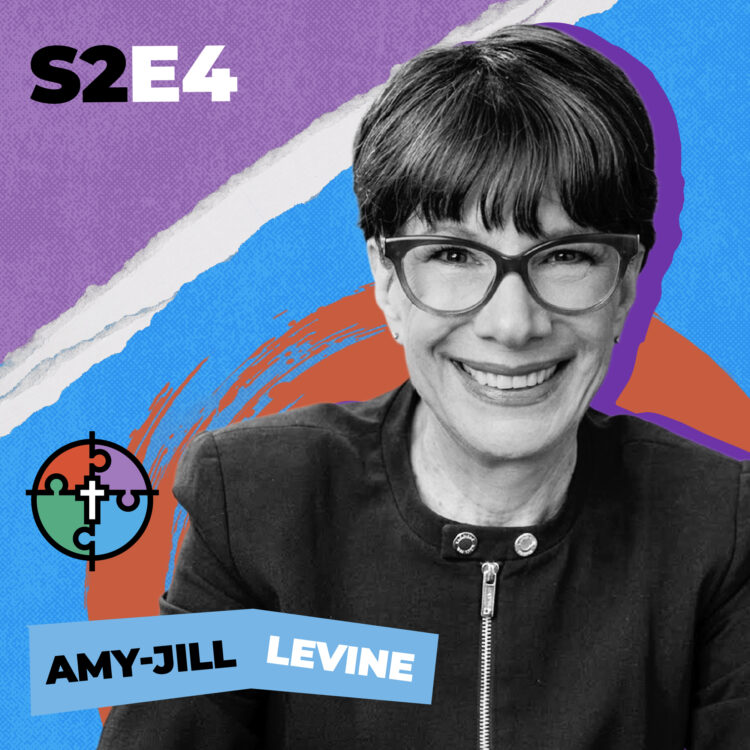
The Jewish Jesus with Amy-Jill Levine

QUICK SUMMARY
What does it mean to take the Incarnation seriously? According to AJ Levine, one of the most respected scholars of New Testament and Jewish Studies in the world, it means taking seriously the time, the place, and the people who first told those stories, and that starts with understanding the Jewish Jesus.
In this episode, hosts Dave Plisky and Fr. John Gribowich sit down with AJ Levine for a conversation that is by turns surprising, funny, and deeply illuminating. Whether you’re a lifelong Christian, a curious skeptic, or someone navigating the space between traditions, this episode will change the way you read the Gospels.
IN THIS EPISODE, WE EXPLORE

How a seven-year-old Jewish girl decided to attend catechism and why it launched a career
Why understanding Jesus’s Jewish identity is actually a matter of Christian doctrine
The woman at the well: why she’s not a sinner, and why that matters
The Parable of the Prodigal Son, and why making Judaism the villain misses the entire point
What “Abba” actually means (and what it doesn’t)
How the same parable reads completely differently in Russia, Australia, Kenya, and the U.S.
Why true interfaith dialogue requires disagreement — not a “kumbaya moment”
What AJ does while listening to podcasts (it involves knitting)

ABOUT AMY JILL LEVINE
AJ Levine is Rabbi Stanley M. Kessler Distinguished Professor of New Testament and Jewish Studies at Hartford International University for Religion and Peace, and University Professor of New Testament and Jewish Studies and Mary Jane Worthen Professor of Jewish Studies Emerita at Vanderbilt University.
She is a member of the American Academy of Arts and Sciences, recipient of the Seelisberg Prize for Jewish-Christian Relations and the H. Walter Award for Interfaith Cooperation, and the incoming president of the Catholic Biblical Association for 2026–2027.
Her books include:

The Misunderstood Jew: The Church and the Scandal of the Jewish Jesus
Short Stories by Jesus: The Enigmatic Parables of a Controversial Rabbi
The Jewish Annotated New Testament (co-edited with Marc Brettler)
The Bible With and Without Jesus: How Jews and Christians Read the Same Stories Differently (with Marc Brettler)
Jesus for Everyone: Not Just for Christians
And many more, including the Beginner’s Guide series and six children’s books with Sandy Sasso

AJ describes herself as “an unorthodox member of an Orthodox synagogue”, someone who works to counter biblical interpretations that oppress and exclude.
MEMORABLE QUOTE
“The best outcome of this type of conversation is you become a better you because you’re more aware of the strengths and weaknesses of your own tradition. You can interrogate your own tradition with questions that you might not have posed — because they’re questions that somebody from the outside would see that you would not see.” — AJ Levine
RESOURCES MENTIONED

The Jewish Annotated New Testament — 3rd edition coming August 2025
The Bible With and Without Jesus — AJ Levine & Marc Brettler
Short Stories by Jesus — The Enigmatic Parables of a Controversial Rabbi
Nostra Aetate — The Vatican II…

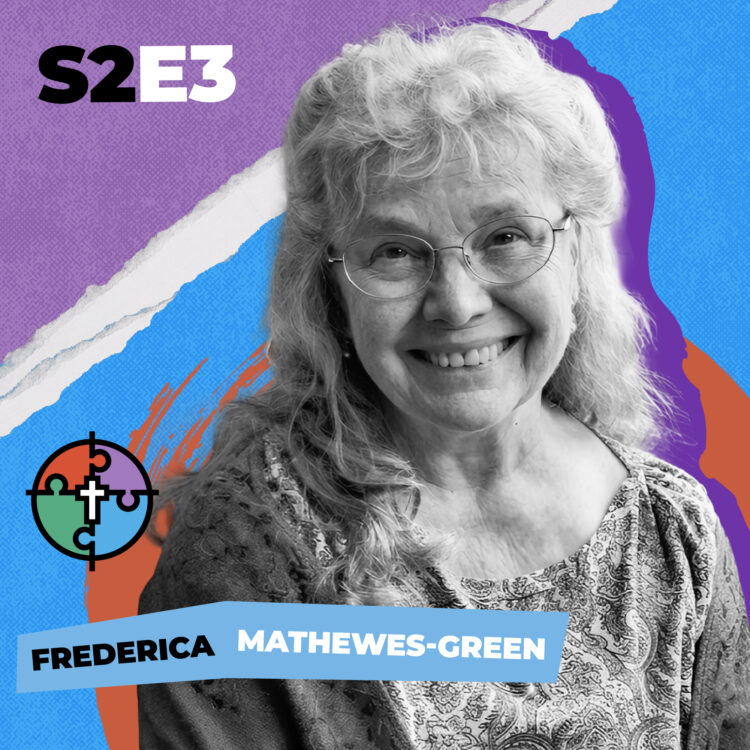
Gold in the Desert with Frederica Mathewes-Green

QUICK SUMMARY
What does it mean to pray without ceasing? Can ordinary people actually do it? In this episode of Religion to Reality, prolific author and Orthodox Christian writer Frederica Mathewes-Green shares her remarkable spiritual journey: from a devout Catholic childhood to atheistic hippie, to a dramatic conversion in a Dublin church, to 50+ years of daily unceasing prayer. She also opens up about leaving the Episcopal Church, the beauty of Orthodox liturgy, and why she believes spiritual loneliness is one of the great unspoken crises of our time.
IN THIS EPISODE, WE EXPLORE 

How a young Catholic woman lost her faith, explored Eastern religions, and unexpectedly encountered Christ in Dublin.
Federica’s dramatic conversion experience and the voice she believes changed her life.
How Federica and Gregory’s marriage became a path back to faith from atheism to the priesthood.
Why liberal theology accelerated church decline and weakened belief in core Christian teachings.
Gregory’s journey from Episcopal priest to Orthodox priest after leaving an increasingly secular church.
Why they left Catholicism for Orthodoxy and what liturgical worship revealed about humanity’s need for transcendence.
What God’s detailed instructions for worship in Exodus teach us about icons, beauty, and sacred art today.
The difference between liturgy and worship, and why Orthodox worship centers entirely on God.
The Jesus Prayer: its origins, spiritual benefits, and Federica’s practical guide to praying it.
What nearly 50 years of daily 3:00 AM prayer has taught Gregory about discipline and devotion.
Catholic diversity vs. Orthodox unity, and why reunion between the two traditions is more complex than it seems.
Federica’s advice on listening well, asking better questions, and meeting the deep human need to be heard.

ABOUT FEDERICA MATHEWS-GREEN
Frederica Mathewes-Green is one of the most prolific voices in American Christian writing, with over 800 published essays and 11 books to her name. Her work has appeared in The Washington Post, Christianity Today, The Wall Street Journal, First Things, and Smithsonian. She has been a commentator for NPR, a podcaster for Ancient Faith Radio, and a consultant for VeggieTales. A sought-after speaker, she has delivered more than 600 presentations at institutions including Harvard, Yale, Princeton, and Cornell, and has been interviewed over 800 times by outlets including NPR, PBS, Time, Newsweek, and The New York Times. She holds an honorary Doctor of Letters from King University and lives in Johnson City, Tennessee with her husband, the Reverend Gregory Mathewes-Green. They have three grown children and 15 grandchildren.
MEMORABLE QUOTE
“Stay alive and keep praying. In time, it becomes second nature, and you realize that He is responding when you invoke His name, and you sense that communion with Him.” — Frederica Mathewes-Green
RESOURCES MENTIONED

The Practice of the Presence of God by Brother Lawrence: The foundational devotional book on unceasing prayer that shaped Frederica’s prayer life. She first read it as a young Christian.
The Jesus Prayer (“Lord Jesus Christ, have mercy on me”): Developed by the Desert Fathers from the 2nd century onward; rooted in 1 Thessalonians 5:17 (“Pray without ceasing”).
1 Thessalonians 5:17: The scriptural basis for the practice of unceasing prayer, which Paul also addressed to the Romans, Ephesians, and Colossians.
Exodus 25: God’s detailed instructions to Moses for building the Tabernacle — gold, embroidery, bells, pomegranates, and carved cherubim — Frederica’s go-to passage on the importance of sacred…

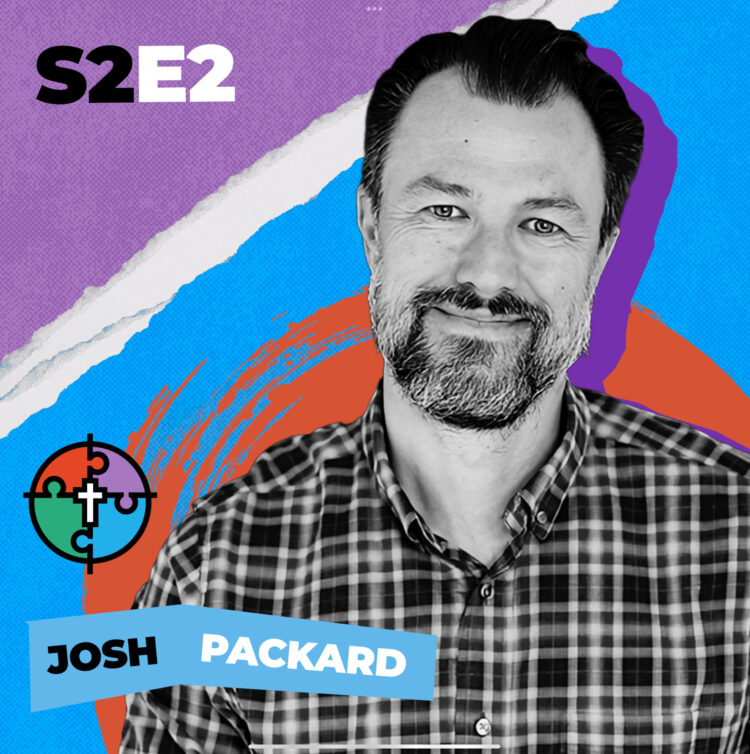
The Practice of Accompaniment with Josh Packard

QUICK SUMMARY What if listening to someone isn’t just a bridge to telling them something, but is itself a formative, sacred act? Sociologist and researcher Josh Packard returns to...

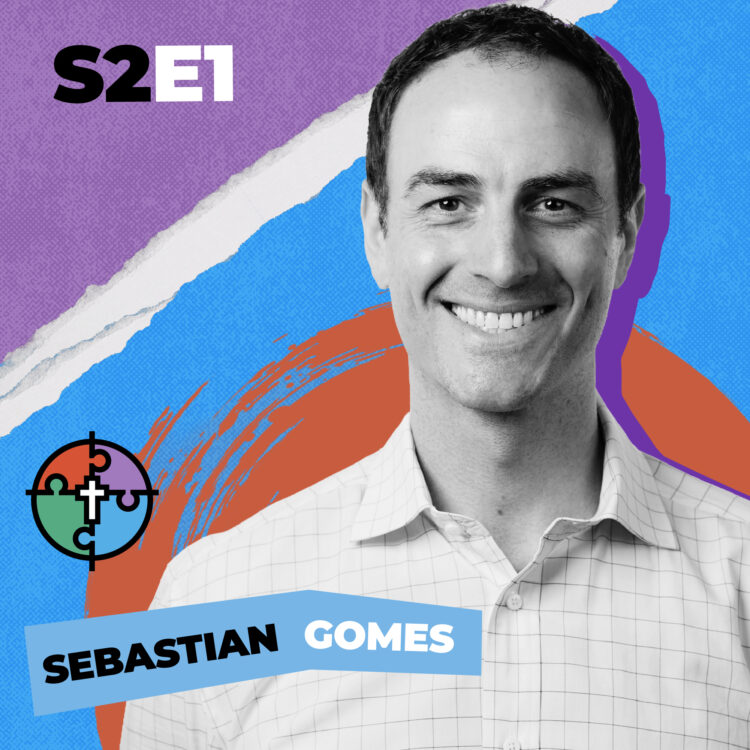
A Church That Listens with Sebastian Gomes

QUICK SUMMARY
What does it actually mean for a 2,000-year-old institution to learn how to listen? In this season premiere of Religion to Reality, multimedia journalist and America Magazine podcast director Sebastian Gomes joins hosts Dave Plisky and Fr. John Gribowich to unpack the Synod on Synodality, Pope Francis’s sweeping effort to transform the Catholic Church into a culture of genuine listening. If you’ve ever wondered whether the Church is really changing, or felt frustrated that it isn’t changing fast enough, this conversation will challenge and encourage you.
IN THIS EPISODE, WE EXPLORE

“The message is not getting through, so maybe we should listen instead.” Sebastian traces Pope Francis’s pivotal shift from speaking to listening, and why it took 12 years of declining church membership to get there. (16:00)
Synodality is not a program, it’s a culture. Sebastian explains why treating the synodal process like a church initiative is the most common misunderstanding people have, and what it actually means to change how an institution listens. (22:45)
What people finally said when they felt safe. From women’s voices to LGBT experiences to stories of poverty and marginalization, Sebastian describes the dramatic moments inside the synod hall when people said what they’d never felt free to say before. (30:30)
The clergy problem. The most common frustration Sebastian hears from parishioners isn’t about Rome, it’s about their own pastor. He reflects honestly on why priests and bishops are often the biggest obstacle, and what to do about it. (25:00)
Synodality is coming whether you like it or not. Using the analogy of the early internet, Sebastian makes the case that synodal culture will eventually shape every debate in the Church, from liturgy to parish closings to outreach to young people. (38:30)
The Gen Z Catholic revival and why it’s complicated. Hundreds of new converts entered the Church this Easter, making national news. Sebastian offers a nuanced take: it’s real, it’s notable, and it doesn’t mean what you might think it means. (51:45)
You can’t become synodal by just reading about it. Sebastian reflects on the personal and spiritual dimensions of synodality, and why you actually have to do it in community before it can transform your prayer life. (46:30)

ABOUT SEBASTIAN GOMES
Sebastian Gomes is a multimedia journalist and the director of podcast and video production at America Magazine, the Jesuit Review. He holds a BA and MA in theology and history from St. John’s University in Minnesota.
His media career began in 2012 at Salt + Light Catholic Media in Toronto, where he produced award-winning documentaries, including The Francis Effect and The Francis Impact. In 2022, he wrote and directed People of God, America’s first feature documentary on the state of parish life across the United States.
Sebastian led America’s coverage of the 2023–24 Rome gatherings of the Synod on Synodality and the 2025 papal election of Pope Leo XIV. He oversees America’s weekly podcast portfolio, including Jesuitical, Inside the Vatican, and The Spiritual Life with Father James Martin.
He is based in Kingston, Ontario, Canada, and contributes regularly to americamagazine.org.
MEMORABLE QUOTE
“Synodality is not a program. It’s a culture. And resistance to synodality is also, in some ways, a resistance to the Holy Spirit — a lack of faith that God is actually present in our midst when we’re together as a community.” — Sebastian G…