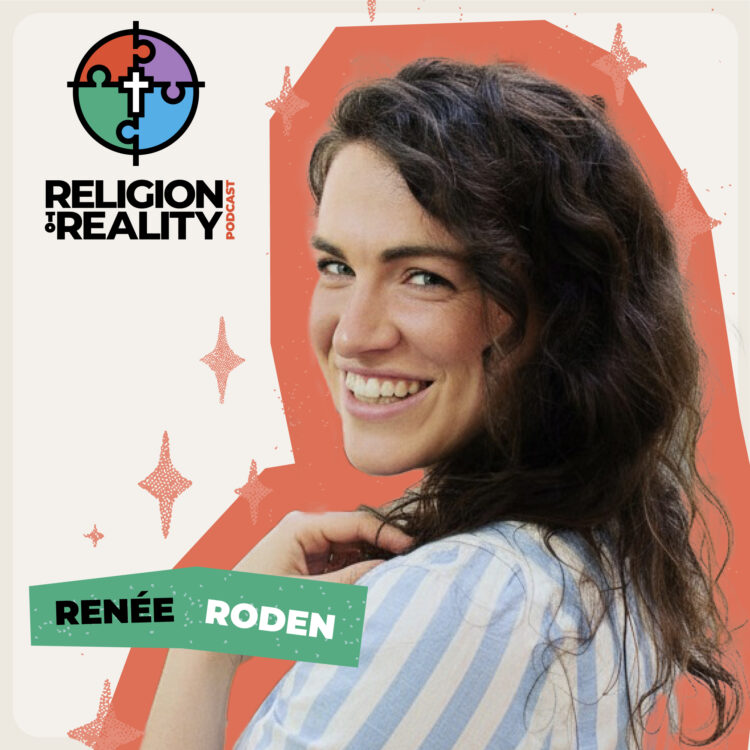
Bonus: The Catholic Worker Movement with Renée Roden
QUICK SUMMARY
In this bonus episode of Religion to Reality, Renée Roden, a freelance religion journalist and Catholic Worker community member, has an in-depth conversation about living faith in action. Renee shares her journey from theater student at Notre Dame to running a Catholic Worker house in Harrisburg, Pennsylvania, while offering a thoughtful exploration of how Catholics can bridge the gap between sacramental life and works of mercy. This conversation challenges listeners to reconsider what it means to truly live out their faith beyond Sunday Mass.
IN THIS BONUS EPISODE, WE EXPLORE
[00:03:00] The Catholic Worker Movement Explained Renee provides an accessible introduction to the Catholic Worker movement, founded in the 1930s by Dorothy Day and Peter Maurin. She explains how Dorothy Day prayed for a way to unite her writing skills, love for the poor, and newfound Catholic faith—and the next day met Peter Maurin, who introduced her to Catholic social teaching. Within months, they launched The Catholic Worker newspaper (cleverly named to counter the communist Daily Worker), and the movement exploded from 2,500 copies to six-figure readership within three years. The movement centers on Houses of Hospitality, voluntary poverty, and practicing the corporal works of mercy.
[00:11:00] Navigating Political Division The conversation tackles how Catholics can remain faithful during politically charged times without getting distracted by national politics at the expense of local, concrete action. Renee explains Dorothy Day’s anarchism: she marched for women’s suffrage and was imprisoned for it, yet never cast a vote herself. Day believed the state always serves its own interests and those of corporations or elites. Rather than focusing on distant political figures we don’t even know personally, the Catholic Worker approach asks: “How do I care for my neighbor right now?” This localized focus prevents us from treating national political disagreements as distractions from the immediate, joyful work we can do in our own communities.
[00:15:00] Personalism as a Third Way Drawing on philosopher Emmanuel Mounier’s concept of personalism, Renee articulates how the Catholic Worker offers a political vision centered on human dignity and freedom—distinct from both individualistic capitalism and collectivist ideologies. She explains that personalism asks fundamental questions: “What causes a human person to flourish? Are our structures supporting a person’s ability to seek the good?” This approach shifts the focus from abstract national policy debates to concrete encounters with neighbors at the local level, bringing politics back to its first principles.
[00:20:00] Voluntary Poverty and True Freedom Renee wrestles honestly with the challenging concept of voluntary poverty, sharing how her partner James once told her “voluntary poverty promotes community and is freeing”—which initially baffled her. She explains how it’s not about deprivation but about answering the question: “Who do I depend on?” Rather than depending on personal wealth and self-sufficiency, voluntary poverty means bringing your needs to God and depending on community. It creates genuine relationships based on material need, not just emotional connection, making community more meaningful and human.
[00:27:00] The Eucharist and Works of Mercy Connection Father John and Renee explore the deep connection between sacramental life and active service, addressing why the discipleship study shows Catholics excelling at liturgical participation but struggling with consistent works of mercy. Renee discusses the liturgical movement’s influence on Dorothy Day, particularly the understanding that the Eucharist contains a call to “go be Eucharist in the world.” As Pope Francis teaches in <...