geonyayyad
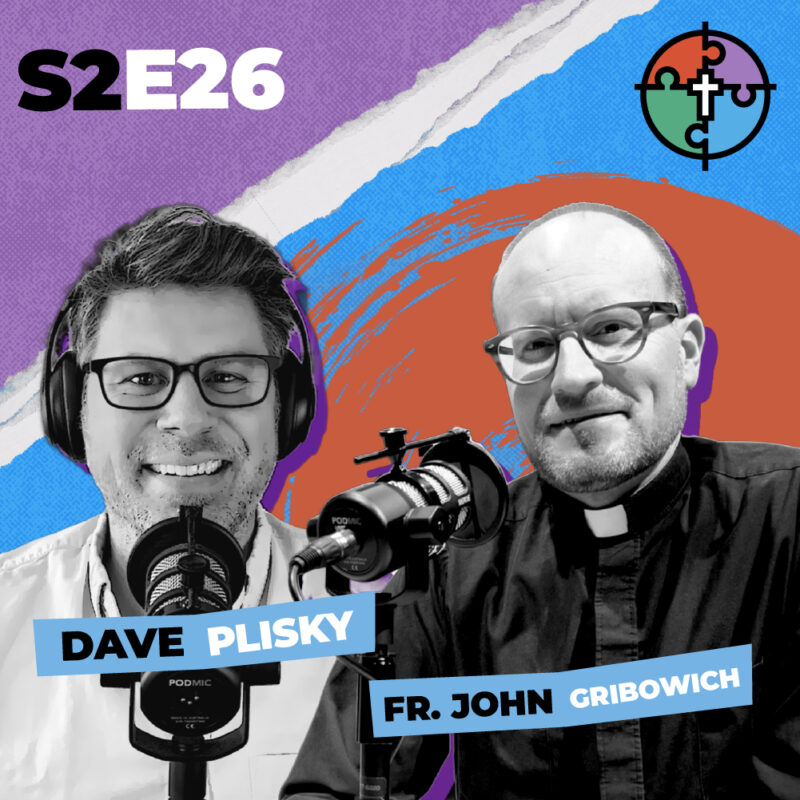
To Affirm Our Humanity with Dave Plisky and Fr. John Gribowich
QUICK SUMMARY
What happens when two Catholics spend a season in interfaith dialogue with 30 guests, including monks, rabbis, professors, a Princeton wrestling champion, and a singer-songwriter rewriting the footnotes of the Greek New Testament? In this season finale, Dave and Fr. John sit down alone to answer that question. They unpack the threads that ran through every conversation, reveal (finally) where the name Religion to Reality comes from, and land on one idea that reframes everything: life is about participation, not orchestration. If you’ve ever wondered whether other traditions threaten your faith or deepen it, start here.
IN THIS EPISODE, WE EXPLORE
Timestamps are approximate and based on the rough cut — update after final edit.
[02:30] “This season has been all about listening.” How an unprompted theme from Season 1’s discipleship study became the mission of Season 2.
[05:00] The season by the numbers. 26 episodes, 30 guests, 9 faith traditions, including two former advisors to President Obama and five current or former monastics.
[09:15] “Religion is basically philosophy that involves God” — and why Dave no longer believes that. What the guests revealed about labels, categories, and the colonial origin of the word “Hindu.”
[13:00] “Life is about participation, not orchestration.” Fr. John on why the guests felt “more human than religious.”
[16:00] Is the church only 21 years old? Richard Rohr’s second-half-of-life idea, Nostra Aetate, and whether interfaith dialogue is a sign of the church maturing.
[21:00] “It’s not about changing things. It’s about going deeper in things.”
[26:15] The names that kept coming up: Thomas Merton, Thich Nhat Hanh, and Bede Griffiths — and what ties them together.
[29:45] Threads across traditions: the Jesus Prayer, purification rituals, major illness as spiritual turning point, and contemplation as “open awareness.”
[34:30] “Catholicism has nothing to say about what a good hike looks like.” What Shinto, Daoism, and other traditions taught the hosts about mind-body-spirit integration.
[39:00] “Maybe the Trinity is less to be understood and more to be experienced.” What the radical oneness of God in Islam illuminated.
[42:30] The name reveal. Fr. John finally explains how Alexander Schmemann’s For the Life of the World gave the show its name and why Christianity, in Schmemann’s view, is “a new life, not a new religion.”
[48:15] The craft of making this show: the hardest part of interviewing, and why some guests wouldn’t talk about their own practice.
[56:15] Can you really listen without agenda? Two guests, AJ Levine and Lauren Fister, challenged the season’s central question. Fr. John’s answer: learn to hear a person’s wounds through what they’re saying.
[1:03:00] “You’re telling me you just got lucky enough to be born into the true one?” Dave gets personal about a lifelong insecurity and how this project dissolved it.
[1:11:30] Final thoughts: “To affirm our humanity is to affirm our divinity.”
[1:13:15] What’s next: the Substack, and the free monthly interfaith gathering.
MEMORABLE QUOTES
“Life is about participation, not orchestration.” — Fr. John Gribowich
“It’s not about changing things. It’s about going deeper in things.” — Fr. John Gribowich
“Maybe the Trinity is less to be understood and more to be experienced.” — Dave Plisky
“To affirm our humanity is to affirm our divinity. That’s incarnational theology 101.” — Fr. John Gri…
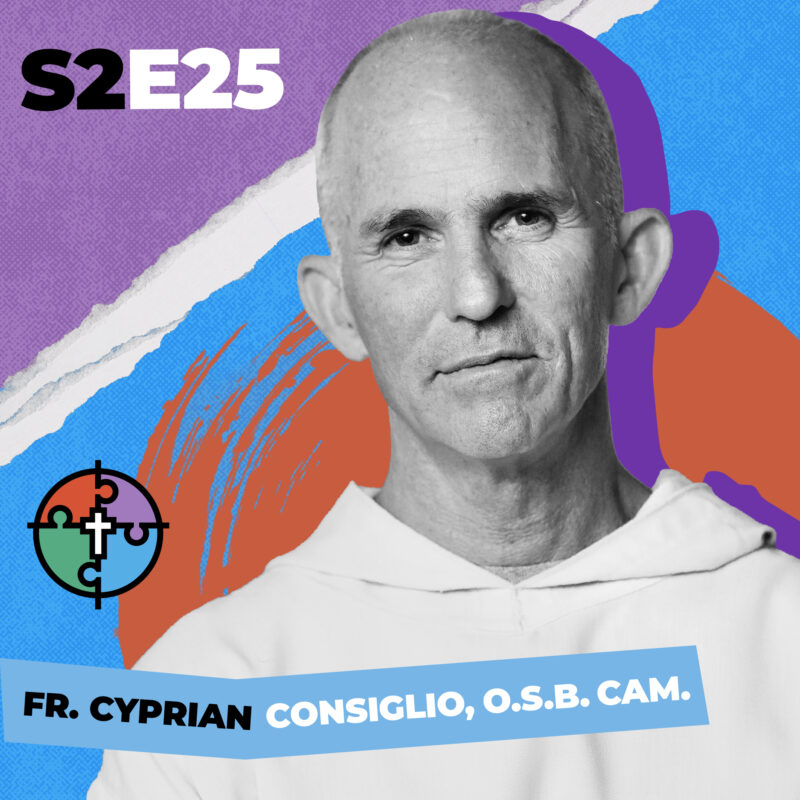
Seeds of the Word with Fr. Cyprian Consiglio
QUICK SUMMARY
What if the entire spiritual life came down to breathing in and breathing out? In our penultimate episode, we sit down with Fr. Cyprian Consiglio, Camaldolese monk, musician, and the Vatican’s International Secretary General for Monastic Interreligious Dialogue, for a conversation that ranges from Miles Davis to the Quran, from Taoist silence to quantum physics. He even sings for us. If you’ve ever wondered how interreligious dialogue actually works, or why the next stage of human evolution might be consciousness itself, hit play.
IN THIS EPISODE WE EXPLORE
Who are the Camaldolese? The oldest reform within the Benedictine family and their “threefold good”, hermitage, monastery, and radical availability to the Spirit. (03:00)
The whole spiritual life in one equation: “The love of God is poured in, and the love of God pours back out… you just have to breathe in and breathe out.” (07:00)
Music born from silence: “The sound of the music you make must be better than the quality of the silence you break.” How a mentor’s words shaped Cyprian’s approach to chant, melody, and “singing the building.” (11:00)
Setting the Quran to music: why singing sacred texts from other traditions is an act of listening and Cyprian performs his setting of “A Common Word” (Surah 3:64) live. (24:00)
Lectio Divina as an interreligious practice: the four levels of scripture’s meaning and how his Rome advisory board will apply the method to Christian, Jewish, Muslim, Buddhist, Taoist, and Hindu texts. (28:00)
“Seeds of the Word”: the 2nd-century idea behind the Church’s modern approach to interreligious dialogue, recognize, preserve, and promote what is good, true, and holy in other religions. (34:00)
Where religions genuinely disagree: “You’ll never hear me say it’s all the same.” The self, time, and why discernment, not blending, is the real work of dialogue. (39:00)
Discovering the silence of God through Buddhism and Taoism and finding it again in his own tradition: “In the beginning was the Tao.” (46:00)
Why meditation is hard everywhere — from video screens at the gas pump to the noise of India: “Never let the perfect be the enemy of the good.” (51:00)
The next stage of evolution is consciousness: Einstein, the abolition of slavery, and why this question is “not hypothetical, this is life or death.” (55:00)
Can AI be conscious? Qualia, the taste of chocolate, and what only humans can preserve. (65:00)
Holy vs. enlightened: Cyprian’s parting challenge, a fierce commitment to spiritual practice and reading the Beatitudes every day. (70:00)
ABOUT FR. CYPRIAN CONSIGLIO
Fr. Cyprian Consiglio is a Camaldolese monk, musician, composer, author, and teacher with dozens of recordings and five books, most recently Epiphanies of Nature and Grace (Orbis Books). After a ten-year term as prior of New Camaldoli Hermitage in Big Sur, California, he is now based in Rome, where he serves as International Secretary General for Monastic Interreligious Dialogue.
Books:
Epiphanies of Nature and Grace
Prayer in the Cave of the Heart: The Universal Call to Contemplation
MEMORABLE QUOTE
“Artificial intelligence will never know the taste of choco…
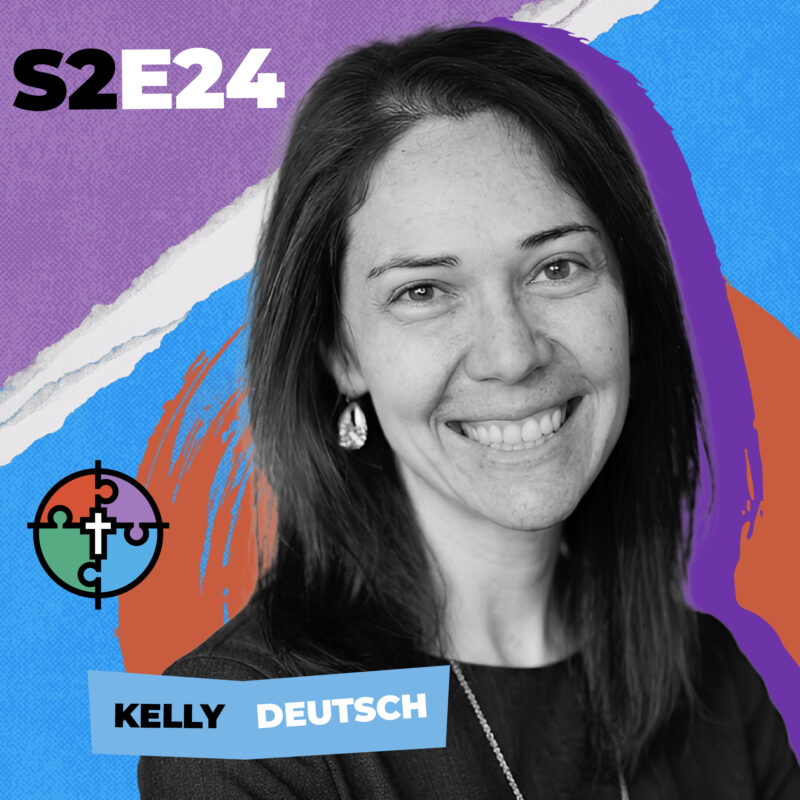
The Scaffolding with Kelly Deutsch
QUICK SUMMARY
What happens when the faith container you grew up in no longer fits and you don’t want to abandon it? Former nun turned “spiritual wilderness guide” Kelly Deutsch joins Dave and Fr. John to explore the second half of life spirituality: the shift from certainty and security toward mystery, wholeness, and a wilder encounter with God. Kelly shares how 18 months of bedridden illness dismantled her identity, why practices are scaffolding rather than the point, and how guilt can be an invitation into deeper spiritual growth.
IN THIS EPISODE WE EXPLORE
[00:03] Cold open — “Find the way that you connect with the divine… and that is your path.”
[01:00] What is “second half of life” spirituality? Dave frames the three responses to a spiritual dilemma: batten down the hatches, throw out the container, or blossom beyond it.
[06:30] Kelly’s story: an “audacious heart.” Meditating an hour a day at 17, discovering Ignatian prayer, and joining a religious community in Rome devoted to spiritual formation.
[09:00] The turning point. A sudden, severe illness leaves Kelly bedridden for 18 months and dismantles the three big things: identity, purpose, and community.
[12:30] The origins of Spiritual Wanderlust. From a Rome term paper on Augustine and John of the Cross to a book, then a contemplative formation platform with year-long programs like the Women Mystic School, Celtic Spirituality, 20th Century Mystics, and this year’s Night School.
[16:30] Who shows up — and why. The two hungers Kelly sees in seekers everywhere: depth and community.
[24:00] First half vs. second half of life. Building the ego’s identity, grasping for certainty and security, until great suffering “dropkicks” us into openness to mystery.
[26:30] Religious suburbia vs. the Yukon. Kelly’s signature analogy: leaving the HOA-approved color palettes of prescriptive religion for a wilderness that’s both gorgeous and terrifying and learning to read your inner compass there.
[29:00] “Nothing and everything.” How Kelly’s Catholicism has changed: dwelling at the mystical heart of Christianity, theosis through kenosis, and why holiness is simply doing the will of God.
[35:30] Practices are scaffolding, not the point. Why rote prayer can insulate us from the wildness of God, and how to “catch the breeze” of the Spirit wherever it blows — Lectio Divina, nature, music, or conversation.
[40:00] Like-minded vs. different-minded community. The relief of finding fellow “spiritual weirdos,” the danger of echo chambers, and why niceness isn’t the virtue — kindness is.
[46:00] Mothers, guilt, and grace. Why guilt is an indicator worth examining, how parenting confronts us with powerlessness, and why feeling like a hot mess is often exactly where the spiritual path leads.
[55:30] Spiritual direction, done holistically. Bringing the body into direction, using Internal Family Systems (“parts work”) to untangle the inner life, and honoring John of the Cross’s “I know not what.”
[59:30] Listening without agenda. Dropping “quidgestions,” holding a sacred container, and trusting that the second half of life isn’t a problem to be fixed.
[1:01:30] Where to find Kelly + a look ahead to next episode’s guest, Fr. Cyprian Consiglio.
ABOUT KELLY DEUTSCH
Kelly Deutsch is a spiritual director, teacher, and founder of Spiritual Wanderlust, a platform for contemplative formation and inner transformation. A former nun, she brings 20+ years of experience at the intersection of mysticism, psychology, and embodied spirituality. After a severe illness left her b…
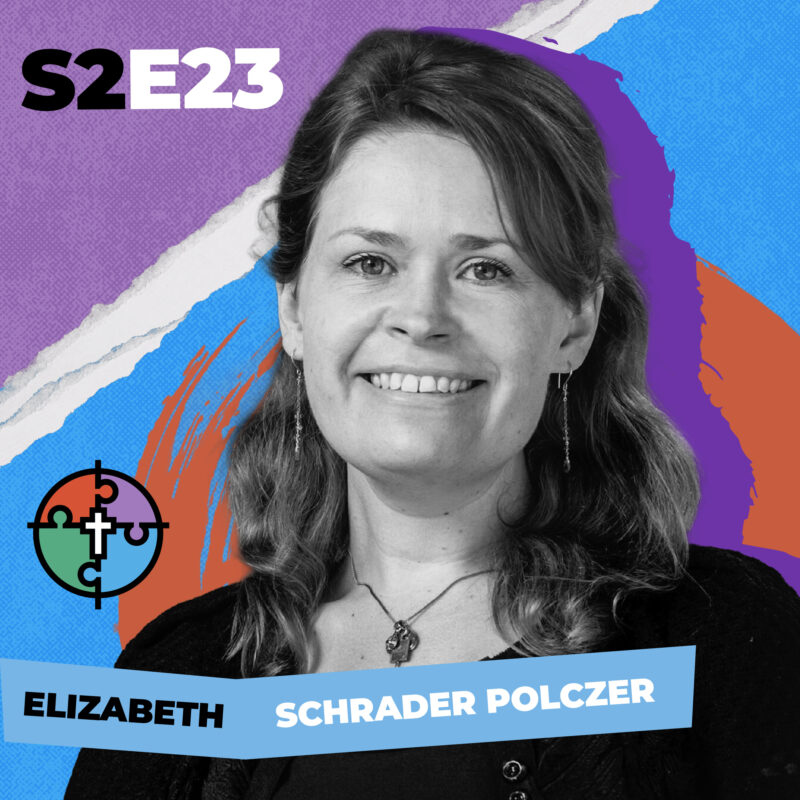
The Wounded Word with Elizabeth Schrader Polczer
QUICK SUMMARY
What if one of the most important women in the Gospels was quietly edited out of the story? New Testament scholar Dr. Elizabeth Schrader Polczer (Villanova University) joins Dave Plisky and Fr. John Gribowich to share how a prayer in a Brooklyn garden, and a pop song, led her from a singer-songwriter career to a discovery in the world’s oldest copy of the Gospel of John: the name “Mary” crossed out and changed to “Martha.” Her peer-reviewed research is now changing the footnotes of the Greek text behind your Bible. Listen in. This one left Fr. John legitimately amazed.
IN THIS EPISODE, WE EXPLORE
[00:02:00] — From singer-songwriter to New Testament scholar. Elizabeth traces her spiritual journey from the Episcopal Church through Eastern meditation, and the prayer in a Brooklyn garden that changed everything: “Maybe you should talk to Mary Magdalene about that.”
[00:07:00] — Down the world’s deepest rabbit hole. A trip to the Brooklyn Public Library, The Complete Idiot’s Guide to Mary Magdalene, and a lay person’s hunch: had the text of John’s Gospel been changed?
[00:10:00] — The discovery in Papyrus 66. Looking at the world’s oldest copy of John (c. 200 AD), Elizabeth spots it in John 11: “the name Mary has been crossed out and changed to Martha.”
[00:13:00] — “You have to stop harassing these scholars. You have to go get a degree.” When no one follows up on the 50-year-old findings, Elizabeth learns Greek, earns her MA, and publishes her thesis in the Harvard Theological Review, research that will now be reflected in the footnotes of the Nestle-Aland Greek New Testament, the critical text from which modern Bibles are translated.
[00:18:00] — Why Martha matters. The Christological confession: in the Synoptics it’s Peter who declares Jesus the Messiah, but in John it’s a woman. If that woman is Mary, possibly Mary Magdalene, she becomes a direct counterpart to Peter.
[00:19:00] — The mirror between John 11 and John 20. The parallels linking Lazarus’s sister Mary and Mary Magdalene: the same question (“Where have you laid him?”), the rare word sudarion, a weeping Mary at a tomb watching someone she loves rise.
[00:23:00] — How (and why) a second-century editor might have done it. One letter separates Maria from Martha in Greek and adding Martha would mean “no woman can be seen as having too much authority.”
[00:30:00] — How the research strengthened her faith. Elizabeth’s stunning reflection on John 11:4 and the “wounded Word”: “Just as Jesus’s body was wounded… this text is wounded, and the Word itself carries its wounds in its body for us.”
[00:36:00] — What do we actually know about Mary Magdalene after the resurrection? Legends of the South of France, the red egg of Eastern Orthodox tradition, and what the fragmentary Gospel of Mary does (and doesn’t) tell us.
[00:40:00] — Mary Magdalene on screen. The Last Temptation of Christ, The Chosen, and how Pope Gregory’s sermon in 591 AD, not Scripture, turned Mary Magdalene into a prostitute in the popular imagination.
[00:45:00] — A Protestant at a Catholic university. Life at Villanova, ecumenical dialogue, and why Elizabeth says her work argues for the inspiration of Scripture: “John is bigger than we’ve given it credit for.”
[00:54:00] — Listening without agenda. Elizabeth’s answer to this season’s signature question: “The thing you most need to hear is hidden in the person who you immediately dismiss as other.”
ABOUT DR. ELIZABETH SCHRADER POLCZER
Dr. Elizabeth Schrader Polczer is Assistant Professor of New Testament at Villa…
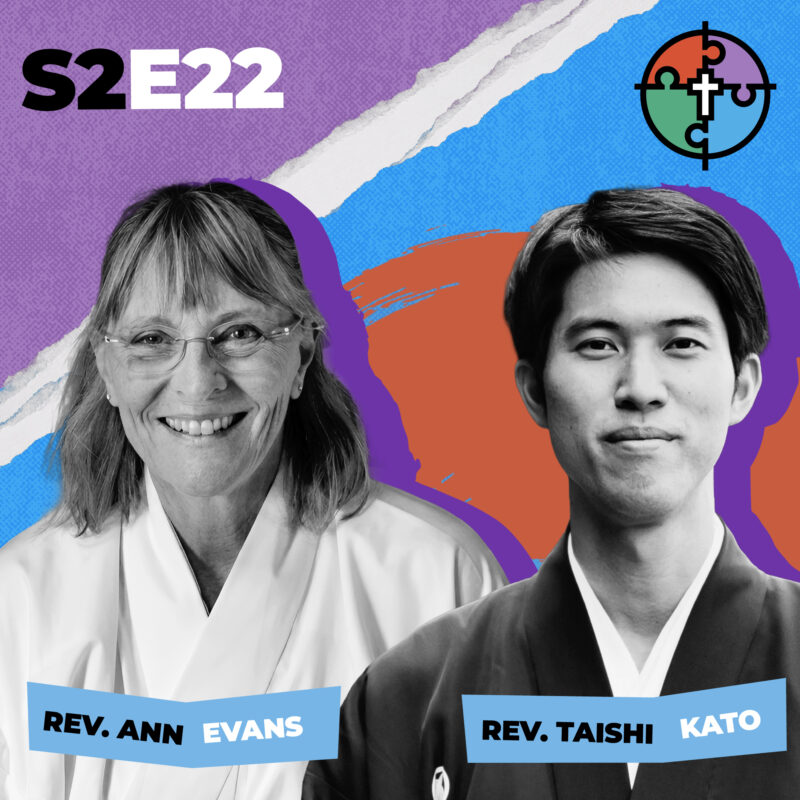
The Way of the Kami with Rev. Ann Evans & Rev. Taishi Kato
QUICK SUMMARY
Shinto has no dogma, no scripture, and no conversion, so what is it? In this episode, we sit down with two Shinto priests. Rev. Ann Evans, one of the few Shinto priests in North America and a certified forest therapy guide, describes the moment a gravel walkway lined with towering cedars felt like home, chants a purification prayer for us, and explains why forest bathing is her “side door to Shinto.” Then Rev. Taishi Kato, heir to a 1,000-year-old shrine in Japan, reveals why the most important practice of a Shinto priest is sweeping leaves.
IN THIS EPISODE, WE EXPLORE
[00:00] Cold open: “It was an incredibly spiritual experience for me, and it just was home”
[00:30] Dave and Fr. John introduce the Shinto episode, the traditional religion of Japan, with two priests as guests
[01:30] Meet Rev. Ann Evans: Shinto priest, ANFT-certified forest therapy guide, and author of Shinto Norito: A Book of Prayers
[03:00] Ann’s story: a Presbyterian upbringing in Pasadena, a Japanese exchange student, and the shrine ceremonies that moved her before she understood them
[05:00] The walk that changed everything: approaching Tsubaki Grand Shrine through towering cedars — “it just was home”
[06:30] Shinto and her Christian heritage: from “is this true?” to “it just is”, no dogma, no scripture, no conversion
[09:00] What is Shinto? The way of the kami, and why humans are innately pure and innately bright
[11:30] Misogi: cold-water purification in waterfalls, rivers, and the ocean, and why cold condenses spiritual energy
[14:00] Translating kami for the West: angels, saints, and loosening up our language
[16:00] Fr. John’s observation: misogi sounds baptismal, ritual, archetypal, and what incense and cold water share
[19:30] Life at the shrine: daily offerings of rice, water, sake, and salt; morning prayer; and ceremonies from baby blessings to business success
[22:00] Ann chants the Harai no kotoba, the prayer of purification, in Japanese, then translates it
[24:30] Why prayers stay in Japanese: kotodama, the belief that the sound of a word carries a soul
[26:30] No evangelists here: from ancient Ko-Shinto in the forests to Shrine Shinto, and Rev. Yukitaka Yamamoto’s vision of bringing Shinto to America in 1987
[30:30] Miyazaki, Totoro, and the Kodama: what Ghibli films get right, and why Shinto must be experienced before it’s understood
[32:30] The torii gate: crossing from the secular to the sacred, plus the shimenawa rope and zigzag shide
[33:30] Heaven as “the high plain”: the unseen world, 50 days of prayer for the departed, and gratitude for ancestors who can still see us
[36:00] Forest bathing (shinrin-yoku) explained: “the forest is the therapist, and the guide opens the door”
[41:00] Why forest bathing isn’t a hike: covering an eighth of a mile in three hours, and what changes when you let yourself be led
[43:00] Chapters of a spiritual life: how Ann’s practice has evolved from young children to young grandchildren
[45:30] Listening without agenda: holding a space people are welcome to step into or not
[46:30] Where to find Ann: Matsuri Foundation of Canada, and the true meaning of “matsuri”, two hands offering a branch in gratitude
[48:30] Meet Rev. Taishi Kato: eldest son of a family that has served their 1,000-year-old shrine for generations
[50:30] Why 70–80% of Japanese people visit a shrine on New Year’s Day
[51:30] The most important practice of a Shinto priest: cleaning the shrine grounds
[53:00] Why it would be easier to cut down the 400-year-old trees and why sweeping their leaves is the point
[54:00] Dave’s closing reflection: there are no shortcuts in the spiritual journey, and what our traditions prepare us for<...

Ik Onkar with Nikky-Guninder Kaur Singh
QUICK SUMMARY
What if paradise isn’t somewhere else but wherever you slow down enough to taste what’s in front of you?
In this episode, renowned Sikh studies scholar Dr. Nikky Singh gives us a warm, jargon-free introduction to Sikhism: its founder Guru Nanak, its radical vision of oneness, and why a free communal meal might be the most sacred thing you’ll ever eat. Whether you’ve never heard of Sikhism or you’re deep into interfaith study, you’ll walk away with practical wisdom on savoring, silencing the ego, and becoming a genuinely better listener. No prior knowledge needed. Nikky starts from the very beginning.
IN THIS EPISODE, WE EXPLORE
[02:00] – From a Punjab convent school to Sikh studies pioneer. Nikky shares her remarkable upbringing: a Sikh girl raised by Catholic nuns, a father who founded India’s first academic department of religion (housed in a building shaped like a ship, with a “sail” for each faith), and the Walt Whitman poem that sent her searching for her own roots.
[10:30] – Sikhism, starting from zero. Who was Guru Nanak? Born in 1469 in a religiously vibrant but divided India, Nanak emerged with one core message: Ik Onkar, one all-inclusive reality. His first words after his mystical vision: “There is no Hindu, there is no Muslim.”
[16:00] – So how does a Sikh live a good life? Nikky unpacks the four pillars of everyday Sikh practice: Sangat (togetherness), Seva (selfless service), Kirtan (singing divine praise), and Langar (the free communal meal, the Golden Temple serves 80,000 of them daily).
[21:00] – The real enemy: ego. Why haumai (“me, me, me”) is “the most toxic stuff” in Sikh thought, and the concrete practices — service, music, poetry that dissolve it.
[24:30] – Inside the gurdwara. No priest, no icon, no altar — just a 1,430-page book of sacred poetry, the Guru Granth Sahib, which includes verses by Hindu and Muslim saints alongside the Sikh Gurus.
[30:00] – A platter with three dishes. Guru Arjan offered the scripture as a metaphor: truth, contentment, and reflection — dishes meant not merely to be eaten, but savored. Nikky connects this 1604 teaching to Laurie Santos’s wildly popular Yale happiness course.
[35:00] – “Can anyone come to langar?” Short answer: yes. Sit on the floor, cover your head, eat. No questions asked — as one Montreal taxi driver could confirm.
[40:30] – The turban and the Five Ks. What Sikh identity looks like, what each of the five articles of faith actually means, and Nikky’s feminist reading of these symbols as carriers of compassion and courage — not mere external signs.
[47:00] – Signs vs. symbols. Fr. John and Nikky find striking common ground between Sikh symbols and Catholic sacramental theology: a symbol doesn’t just point to a reality, it embodies one.
[48:30] – Listen. Embrace. Love. The Japji’s sequence of suniye (listening) and maniye (embracing), and the four loves Nikky says our anesthetized culture desperately needs: love of the divine, of the body, of humanity, and of this magical world.
[55:00] – Becoming a better listener, starting today. It begins with actually hearing the answer to “How are you?”
ABOUT DR. NIKKY-GUNINDER KAUR SINGH
Dr. Nikky Singh is the Crawford Professor and Chair of Religious Studies at Colby College and an internationally renowned scholar of Sikh studies. Born in Punjab, India, and educated at Wellesley College and Temple University, she is the author of numerous books, including The First Sikh: The Life and Legacy of Guru Nanak and translations of Sikh scripture published by H…
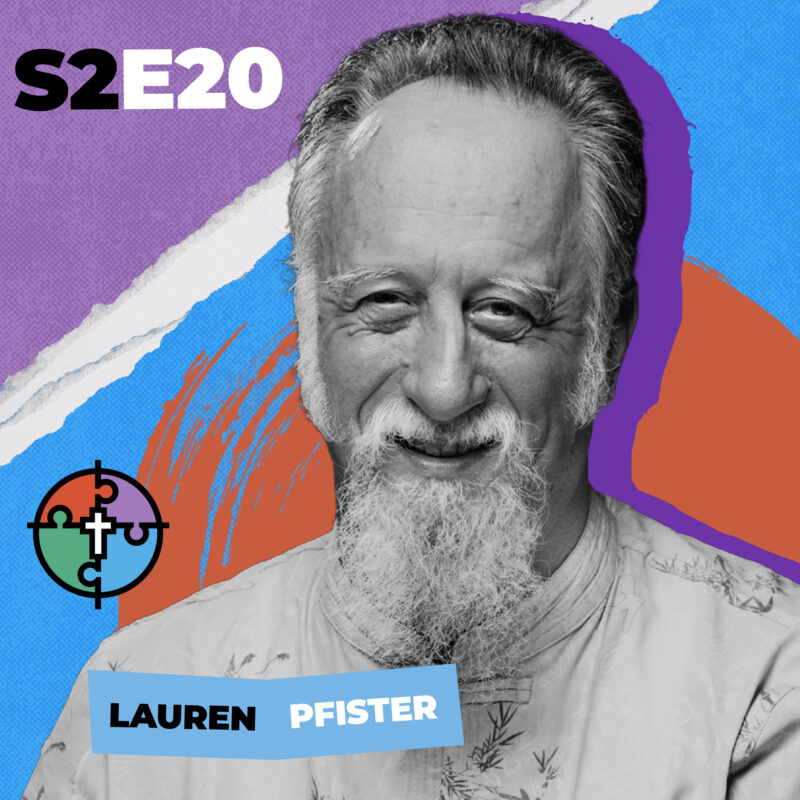
A Ruified Christian with Lauren Pfister
QUICK SUMMARY
What does it mean to be a “Ruified Christian”? In this episode of Religion to Reality, hosts Dave Plisky and Fr. John Gribowich sit down with Dr. Lauren F. Pfister, professor emeritus at Hong Kong Baptist University and a 30-year resident of Hong Kong, to explore the deep overlap between Confucian (Ru) tradition and Christian faith. Dr. Pfister shares his conversion story, the night his university community wept over Tiananmen Square, and the three-year beard-growing ritual he created to honor his late parents. Plus: a solo primer on the basics of Confucianism to open the episode.
IN THIS EPISODE WE EXPLORE
Confucius (Kong Qiu / Master Kong) — founder of the Ru (Confucian) tradition
The Confucian Analects, Mengzi, Zhongyong, Shujing, Xiaojing — foundational Ru texts referenced throughout
Dietrich Bonhoeffer and Søren Kierkegaard — early spiritual influences on Dr. Pfister
Ralph Covell — missionary-scholar and mentor at Denver Seminary
Chang Chung-ying (Chen Dongyin) — Dr. Pfister’s teacher, whose late-in-life conversion is discussed
Hans-Georg Gadamer — philosopher whose dialogue with Chang Chung-ying helped shape the latter’s turn toward theism
Lin Yutang, From Pagan to Christian — Chinese writer and intellectual referenced as a parallel conversion story
C.K. Yang — sociologist who coined the term “dispersed religion” to describe folk Confucian practice in modern China
KEY MOMENTS
[00:00] Cold open — Dr. Pfister on encountering “a personal relationship with the living God”
[00:01–03:00] Host Dave Plisky’s solo primer on Confucianism: the five core virtues (ren, li, yi, zhi, xin), the five foundational relationships, and the ideal of the junzi
[05:00] Dr. Pfister’s upbringing in a shrinking Methodist church in Colorado and his start at the University of Denver in 1969, amid the “Woodstock West” protests
[08:00] A life-changing lecture leads to his conversion and a shift from mechanical engineering into the humanities
[11:00] The call to Hong Kong Baptist College in 1987, and mentor Ralph Covell’s influence
[12:00] June 4, 1989 — the Tiananmen Square massacre and the moment his university’s president wept publicly during Sunday service, cementing the Pfisters’ decision to stay in Hong Kong for good
[18:00] What it means to call himself a “Ruified Christian”, drawing parallels to Origen, Augustine, and Aquinas adopting Greek philosophy into Christian thought
[21:00] A deeper look at what Confucianism (the Ru tradition) actually is, and why it’s often called a philosophy rather than a religion
[26:00] The story of his own teacher’s late-in-life conversion, sparked by a dialogue with philosopher Hans-Georg Gadamer
[27:00] Chinese intellectual Lin Yutang’s journey from Christian, to skeptic, back to Christian
[33:00] A crash course in Chinese history: the Warring States period, the rise of the Qin and Han dynasties, and how Confucian thought shaped “Imperial China”
[39:00] How ancestor veneration, ritual, and cosmology (yin and yang) gave early Ru tradition religious dimensions, and the centuries-long “Rites Controversy” it caused for Christian missionaries
[44:00] The three-year mourning ritual Dr. Pfister created after his parents’ deaths, including growing out his beard as a l…
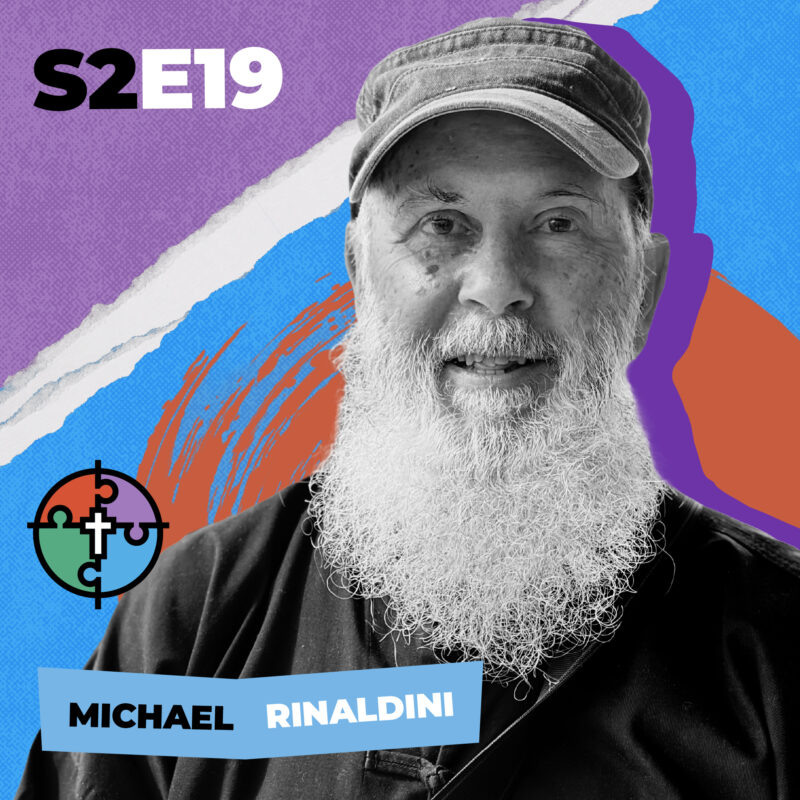
Sitting and Forgetting with Michael Rinaldini
QUICK SUMMARY
What can a Daoist priest teach Christians about silence? Shifu Michael Rinaldini spent years in Trappist and Carthusian monasteries, had a reconversion to Catholicism inside a Vedanta monastery, and followed Thomas Merton’s footsteps room by room before finding his home on the Daoist path in his early 40s. Ordained in Beijing as a 22nd-generation Daoist priest, Michael joins Dave and Fr. John to explore Zuowang (“sitting and forgetting”) meditation, Qigong, Daoist cosmology, and why he still sends his priest-students on retreat to Catholic monasteries. If you’ve ever said, “I’m spiritual but not religious,” Michael has advice you won’t expect.
IN THIS EPISODE WE EXPLORE
Why the apophatic tradition, the prayer of unknowing, may be the bridge that unites Christianity with the religions of Asia
What Zuowang (“sitting and forgetting”) meditation is, and why it uses “no walking sticks”, no mantras, no recitations, nothing to hang onto
How someone becomes an ordained Daoist priest in America (hint: it starts with a nine-month novitiate and a 1,000-day training)
Why Qigong, Tai Chi, Chinese medicine, and Daoist meditation are all one system, not separate practices
Michael’s surprising advice for the “spiritual but not religious”: find your local Catholic monastery
The Daoist cosmology of pre-heaven and post-heaven, the Taiji, and yin and yang, and why the spiritual path means working your way back up to the One
[00:00] Cold open: “There’s no separation of anything. It’s all one total unity.”
[02:30] Meet Shifu Michael Rinaldini, Daoist priest, Qigong teacher, and Camaldolese oblate
[04:30] Michael’s winding spiritual journey: The Razor’s Edge in high school, Zen in college, a yoga path to India, and a reconversion to Catholicism, inside a Vedanta monastery
[09:00] Six years of monastery-hopping: Christ in the Desert, the Carthusians in Vermont, the Trappists in Georgia and always arriving “two or three years behind Thomas Merton”
[12:00] The realization that changed everything: “Maybe I really don’t want to be a monastic monk. Maybe I just want to be on the spiritual path.”
[13:30] How minor health problems led to Qigong, Chinese medicine and ordination as a 22nd-generation Daoist priest in Beijing in 2003
[16:00] Inside a Daoist retreat: Zuowang, the meditation of “sitting and forgetting,” and purifying the heart-mind to uncover your innate nature (Xing)
[19:30] The path to Daoist priesthood: a nine-month novitiate, a 1,000-day training and why Michael tells his students to make solitary retreats at Catholic monasteries
[21:30] Qigong, Tai Chi, acupuncture, and meditation: one system with ancient shamanic roots, not separate disciplines
[25:00] Dave asks Michael to explain the Dao. Michael’s answer: “Well, I really can’t.” (Stay with him, he gets there.)
[26:30] Non-duality, the unitive vision of Fr. Bruno Barnhart, and the apophatic common ground between East and West
[30:30] Offering incense at the Daoist temple in the morning, the Buddhist temple in the afternoon: how China blends traditions the West keeps separate
[34:45] “I’m not religious, but I’m spiritual,” and Michael’s advice to find the silence of the desert at your local monastery
[39:00] Getting started with Qigong and Tai Chi: why one skillful local teacher beats a pile of books and videos (“gong” literally means skill)
[43:30] Philosophical vs. religious Daoism and the scholar-practitioners who insist that reading the Tao Te Ching without practicing stillness is “…
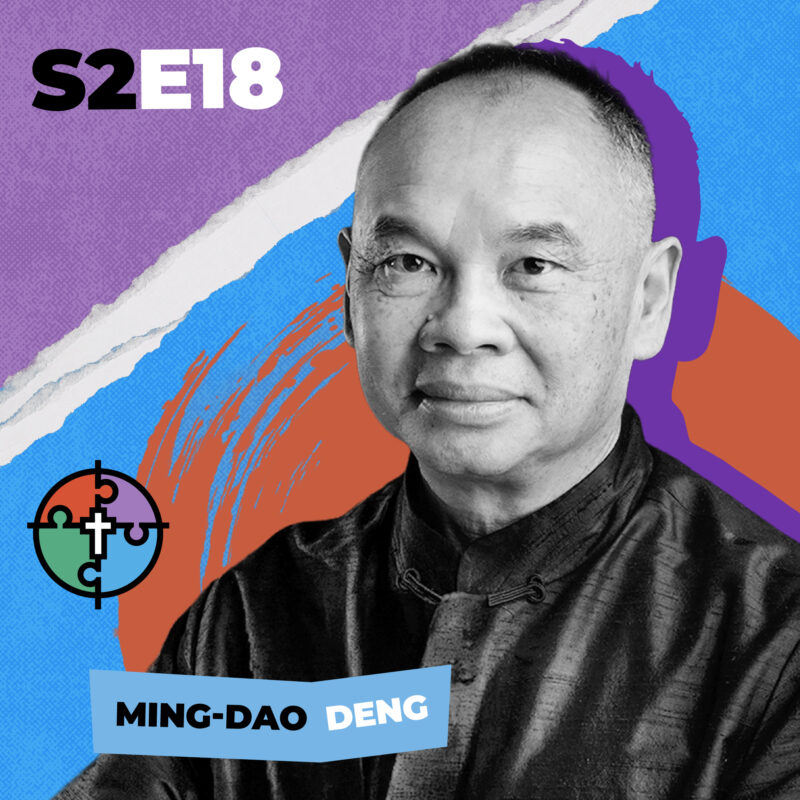
No Sacred, No Secular with Deng Ming-Dao
QUICK SUMMARY
What if the world isn’t divided into sacred and secular because everything is already sacred? In our first Daoism episode, bestselling author and martial artist Deng Ming-Dao (365 Tao) walks two Catholic hosts through the heart of Daoist practice: why self-cultivation means removing obstacles rather than becoming “better,” how the breath bridges body and spirit, what a Daoist diet looks like, and why evil is a human problem, not a divine one. A calm, generous conversation full of unexpected overlaps with the Gospel and a masterclass in listening from a tradition whose word for “sage” literally contains the character for ear.
IN THIS EPISODE, WE EXPLORE
[00:03] From an unhappy kid to a lifelong path. Ming-Dao found the Tao Te Ching on his mother’s bookshelf before his teenage years and kept noticing the word Tao everywhere, from Zen texts to art history. What hooked him: a step-by-step system that begins with the physical and leads to the spiritual.
[00:06] Self-cultivation isn’t self-improvement. The Daoist view: you are already naturally pure and good, but obscured by bad habits, bad ideas, and socialization. “The idea is not to make yourself better. The idea is to divest yourself of these obstacles.”
[00:07] The breath is the bridge. Purification starts with the body; the breath, both voluntary and involuntary, is the link between body and mind. That’s the simple thesis of Qigong.
[00:12] What transformation actually looks like. Better health, flexibility, stamina, and calm and a surprising pattern Ming-Dao has seen repeatedly: about a month into practice, students often get sick as the body “pulls the illness out.”
[00:14] A Daoist approach to eating. Whole grains (in moderation), vegetables in three colors per meal, minimal meat, fermented foods, seasonal adjustment, home cooking over restaurants and skip the alcohol.
[00:18] “Religious” vs. “philosophical” Daoism is a scholarly construct. Who cares what your philosophy is if you’re decrepit and unhealthy? Ming-Dao explains why he practices without ceremony, superstition, or fear of divine punishment.
[00:24] “How will you be a person?” His grandmother’s kitchen held both Buddhist and Daoist figures. In Chinese communities, the question was never “How will you be religious?” traditions are shared like neighbors share a street.
[00:28] What if everything is divine? Air, water, food, life itself: given to us, unconditionally, by a world we did nothing to earn. “If we really open our eyes, this is a sacred world.”
[00:35] The problem of evil. Daoism has no existential evil. Natural disasters aren’t “evil”; only human behavior is. Which means behavior is a choice, and mercy extends to everyone: “you rescue everybody, both the good and the not good.”
[00:42] Festivals as embedded philosophy. From Tomb Sweeping Day to the poet’s festival in May, the lunar calendar carries Daoist lessons into the whole community, hear a story of honor every year of your life, and you can’t help but absorb it.
[00:48] Fame, “enough,” and the useless tree. Daoism warns against celebrity and status. The parable: useful trees get cut down for timber; the gnarled, “useless” tree survives.
[00:51] Finding a true teacher. Why lineage matters, what it was like being the demonstration partner for 13 years, and the master from Huashan who fled the Cultural Revolution to carry his tradition to America. “Even the masters need masters.”
[00:56] Mercy, compassion — can we just say kindness? Don’t hide behind semantics. Kindness to others is kindness to yourself, but kindness is not indulgence, and self-culti…
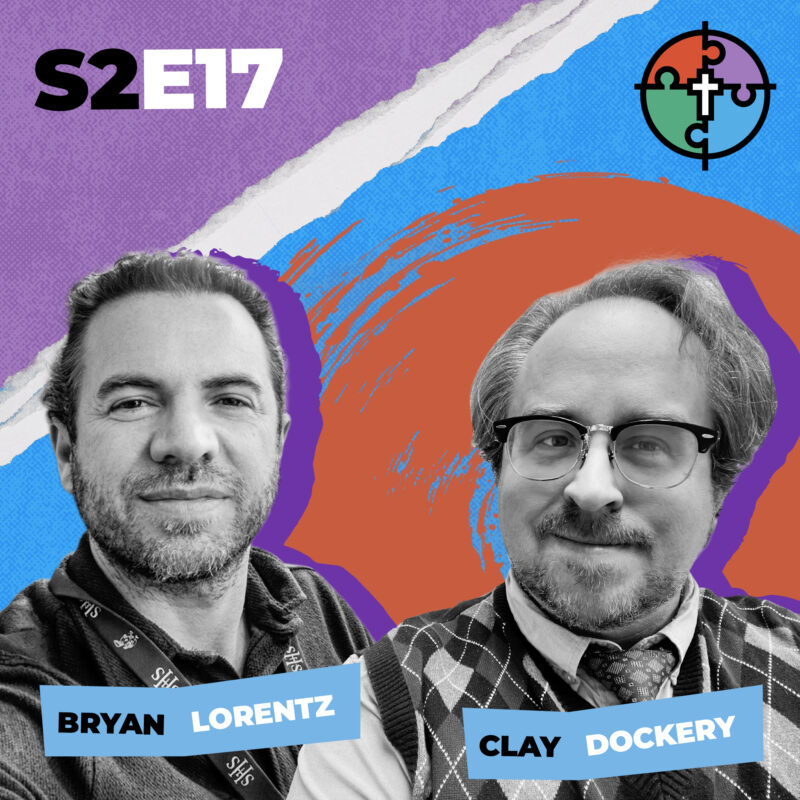
Everyday Interfaith with Bryan Lorentz & Clay Dockery
QUICK SUMMARY
What happens when your spiritual calling doesn’t align with the tradition you grew up in or the one your spouse practices? In this double episode, world religions teacher Bryan Lorentz recalls the fifth-grade moment he begged his dad to let him leave home for a monastery, and the answer that changed his life. Then interfaith minister Clay Dockery shares what a decade of working with Jewish-Christian couples taught him about raising kids, keeping families together, and listening without an agenda. Two stories, one lesson: you don’t have to leave where you are to find the divine.
IN THIS EPISODE, WE EXPLORE
[00:00] Cold open: “It’s really easy to steal away to the mountains to find peace”
[00:30] Dave and Fr. John introduce the segue episode between the Buddhism and Daoism series
[02:00] Meet Bryan Lorentz: teacher, musician, meditator, and beekeeper
[03:00] Growing up in San Francisco with teacher parents, five boys, and a family culture of music and open spiritual conversation
[05:00] The fifth-grade calling: “When I grow up I wanna be a monk… but I don’t wanna wait” (including the Halloween monk costume)
[10:00] The muddy minivan conversation: Bryan asks his dad, a former Salesian seminarian, to let him leave for the monastery
[12:00] The answer that stuck: peace isn’t found by running away, because your emotional baggage travels with you
[16:00] Bringing contemplation into a Catholic classroom: how Bryan gets energetic freshmen to meditate 5–10 minutes every class
[18:00] The free-throw-line analogy: coaching students to hold their focus when everyone around them is losing theirs
[21:00] Bryan finally does go East: monasteries in Nepal, Tibet, India, Sri Lanka, and China, and thousand-year-old temple stones worn soft by barefoot pilgrims
[23:30] The Sisters of the Sacred Heart (RSCJ) and espacio: East-West contemplative practice in a global network of Catholic schools
[25:00] Waking at 5 AM with Burmese monks in Bodh Gaya as the Muslim call to prayer rings out
[27:00] Basketball, Tai Chi, and prayer rugs: the story of Ibrahim at Beijing Sports University
[30:30] Dave’s reflection: the sacred hides in minivans, soccer practice, and Halloween costumes
[31:30] Meet Clay Dockery: seminary graduate, interfaith family minister, and nonprofit leader
[33:00] Life on the margins: the nerd on the tennis team who could talk to everyone
[35:00] Kicked out of Sunday school five times for asking the wrong questions, and the day a rabbi was heckled from the front pew of Clay’s childhood church
[38:00] Rebuilding faith: exploring Unitarian, Presbyterian, and other traditions before finding a home at the Presbyterian Student Center at the University of Georgia
[41:00] How Interfaith Community works: meeting Jewish-Christian families where they are instead of asking whether they “should” exist
[44:00] The three moments interfaith couples seek help: when they first commit, when kids arrive, and when those kids near bar mitzvah or confirmation age
[48:00] Inside the curriculum: Jewish and Christian teachers co-teaching every lesson, and fully authentic (never watered-down) holiday services
[51:30] Living in “liminal space”: why Clay is most at home in the tension between what is and what could be
[52:30] Fr. John’s question: should interfaith parents give kids something…




Recent Comments