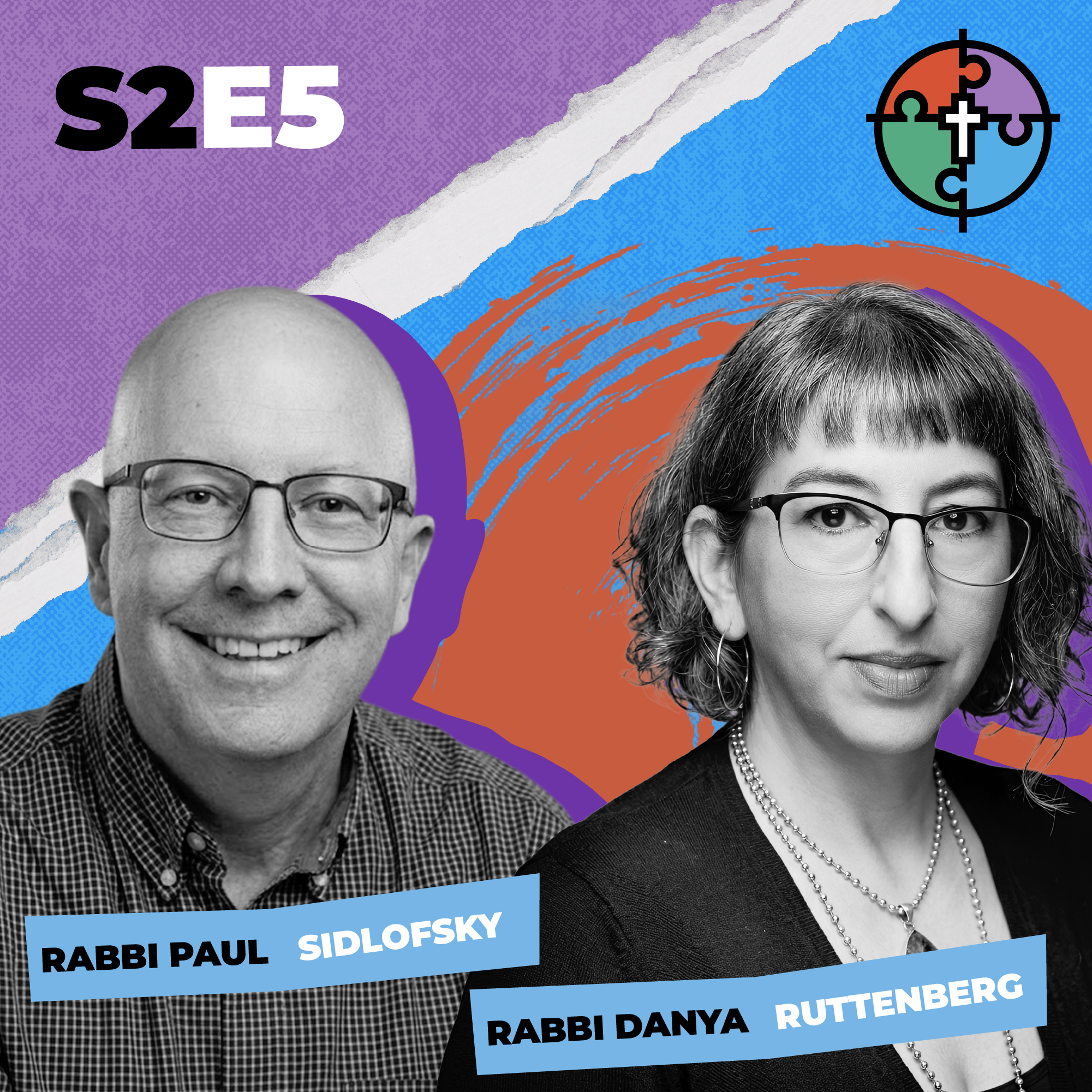
The Practice of Repair with Rabbis Danya Ruttenberg and Paul Sidlofsky
QUICK SUMMARY
What if our culture’s obsession with forgiveness is actually getting in the way of healing? In this rich conversation, award-winning author and Rabbi Danya Ruttenberg challenges popular forgiveness culture, arguing that the real obligation falls on the person who caused harm, not the person who survived it. She walks us through the Jewish framework for repentance, repair, and amends (drawing on Maimonides) and unpacks why “cancel culture” and “forgiveness culture” are two sides of the same broken coin. We also hear from Rabbi Paul Sidlofsky of Temple Israel Tallahassee, who brings a deeply thoughtful perspective on disagreement within Judaism, the living nature of Torah interpretation, and how to hold tradition and change in creative tension. If you’ve ever wrestled with whether you have to forgive someone or wondered what accountability actually looks like, this episode is for you.
IN THIS EPISODE, WE EXPLORE
On forgiveness: Forgiveness is not something a harmed person owes; it may be healing, but it is not obligatory, especially when the person who caused harm has not done the work of repair. Forgiveness and reconciliation are also not the same thing.
On repentance (per Maimonides): The person who caused harm must (1) fully own what they did, (2) do deep internal work to become someone who wouldn’t repeat the harm, (3) make meaningful amends, and (4) apologize sincerely, up to three times, with an accountability team, before it can be considered their best effort.
On Torah: Jewish tradition has always been one of living interpretation. As Rabbi Sidlofsky puts it, “Halakha has a vote, but not a veto.” Even Moses, in the famous Talmudic story, sat in Rabbi Akiva’s classroom and couldn’t understand his own books because the tradition had grown so richly beyond the original text.
ABOUT RABBI DANYA RUTTENBERG & RABBI PAUL SIDLOFSKY
Rabbi Danya Ruttenberg is the award-winning author of eight books and writes at lifeisasacredtext.com. Named by Newsweek as a “rabbi to watch” and recognized by the Center for American Progress as a faith leader to watch, she has written for The New York Times, The Washington Post, The Atlantic, TIME, and many other major publications. Her commentary has appeared on NPR, CNN, NBC News, and Good Morning America. She led the Network of Rabbis for Repro during and after the landmark 2022 Supreme Court decision on abortion law and has played an active role in shaping Jewish responses to sexual misconduct and systemic injustice. Her book On Repentance and Repair is a must-read for anyone thinking about accountability culture.
Rabbi Paul Sidlofsky brings 38 years of congregational experience across the United States and Canada. Currently based in Tallahassee, Florida, he serves Temple Israel and is deeply engaged in interfaith work, including co-chairing the Cap Tallahassee Interfaith Clergy Council and participating in the God Squad with the Village Square. He is a warm and thoughtful voice on Torah interpretation, Jewish-Christian dialogue, and what it means to build an inclusive community.
MEMORABLE QUOTE
“If you cause harm, you have an obligation to clean it up — to truly own it fully in all the ways. And if you are harmed and your harm-doer has not done the work of repair and amends, you do not owe this person forgiveness at all.” — Rabbi Danya Ruttenberg
RESOURCES MENTIONED
- On Repentance and Repair by Rabbi Danya Ruttenberg — her book on the Jewish roadmap for accountability
- ✍️ Rabbi Danya’s Substack: lifeisasacredtext.com
- Temple Israel Tallahassee: search “Temple Israel Tallahassee” for their website and contact
- Maimonides’ Laws of Repentance (referenced throughout — the 12th-century framework Rabbi Danya draws on)
- Previous episode: Amy-Jill Levine on the Jewish Jesus — if you missed it, go back and listen
- Next episode: Dalia Mogahed on Islam — one of the top TED Talks of 2016